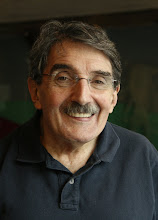
September. I don’t remember all that much about September, 1950, the year I started school.
I lived in Amityville.
I know Harry Truman was the president in 1950, but my guess is, I picked that up later, maybe even this month, from a book entitled, “Truman,” by David McCullough.
I’m kidding, of course. I knew about Truman before this book, and maybe I even knew it then, too, but I don’t remember thinking about it then.
By this time that year, I had fairly well familiarized myself with our new house and environs. We had moved from a studio apartment over my aunt and uncles Norman Avenue garage the previous summer, (where, incidentally, I’d lived my whole life, as far as I knew) to a brand new house on Hamilton Street, maybe four blocks North.
Kids magically appeared on Hamilton Street, but I thought slowly. The first, my predecessor, was Bonnie Jeanne Schaztel. I was the second kid on Hamilton Street. Bonnie’s sister, Elizabeth (Libby) when she was born, was third. After that, a whole flood of kids arrived.
During what passes for public speaking engagements, I’ve said that Bonnie Jeanne and I played, “Cow-[pause] persons and [pause] Native-Americans,” together. “We had different names for them, of course,” I say, to stretch the laugh. “I don’t remember them.”
If you do it right, as if you’ve just thought of it and were careful not to offend, you can get two good laughs out of it; even three, if you smile and let the audience know you planned it that way all the while.
I didn’t know I’d spent the better part of 30 years becoming increasingly comfortable standing in front of people telling stories of my life. One story sort of led naturally into the other, I thought, until a comedian friend complimented me on my, “Callbacks,” as if I intended something.
“What’s a callback?” I said.
He explained that you set the story up so that you’re going to come back to a phrase or a repeated memory long after the audience heard it the first time. That’s a callback.
I started out one story with the fact that I was a Brooklyn Dodger fan. Walter O’Malley, owner of the Brooklyn Dodgers, had a summer house in Amityville, and used to give the Amityville cops home game tickets to his box seats, when he wasn’t going to be in town.
“What’s a box?” I asked my Amityville cop father.
“Box Seats. We’re in Mr. O’Malley’s Box Seats. Watch the game. There’s your hero, look! Gil Hodges.”
“Box Seats. Oh.” There was no box.
I talked and talked, about teaching, advertising, and somehow got the story around to the Suffolk Sun, 1969. I was going to ask for a job there, despite the fact that had I no journalism background at all. None.
I pulled into the parking lot, and was about to go inside, when an unmistakable voice came on the radio: “Hello, this is Howard Cosell, Speaking of Sports,” which Howard pronounced unlike any other person. “Suppoorrtss.”
“Gil Hodges, manger of the New York Mets, has finally done something smart.” Cosell pronounced. “Back after this…”
I hadn’t followed the Mets. I had no interest in baseball since the Dodgers left Brooklyn. But, I told the audience, Cosell now had me trapped. I had to listen to a Gillette commercial and a, “Shaffer is the one beer to have when you’re having more than one,” commercial. And some other commercials, in order to hear Cosell come back and say something good about Hodges, who, yes, had been my hero, in spite of all the pressure to make Jackie Robinson my hero, because, bottom line, I had a first-baseman’s glove, and Gil played first.
Cosell said that Hodges had decided to start Buddy Harrelson at short. I slammed the car door and stormed into the offices of The Suffolk Sun, madder n’ hell at myself for letting Cosell upset me like that, about a ball team I didn’t care about or even know about. Buddy Harrelson. Who the hell was Buddy Harrelson?
The woman at the reception counter was really nice, considering my mood. She called the city editor, and he set up an interview, right there. For me.
I didn’t know that the Suffolk Sun was about to fold.
The City Editor interviewed me and arranged for, next, an interview with Cortland Anderson, editor of the paper. I didn’t think that was unusual, believe it or not. I just walked into his office, which I noticed was huge, and festooned with Mets memorabilia.
Anderson didn’t look up. “What makes you think you can write for this paper?”
“I read it,” I said.
It didn’t sound the way I’d planned.
He looked up, cursed, then stood, and called me a name, cursing.
I backtracked fast. So much so that he offered me a coffee, to calm my nerves. He asked what I thought of that (curse word) Mets Manager Gil Hodges.
“That [curse word]!” All I knew was what Howard Cosell had just said. “He ain’t no [curse word].” So, I said it. “He just put that guy Harrelson at Short. Buddy Harrelson.”
He thought about a moment, and he hired me.
Friday, August 27, 2010


Friday, August 20, 2010
Reunion
I don’t know why I so wanted to be different.
First-through-tenth-of-all, it’s not possible; though I think that idea made it all the more desirable to me. But, really, I wanted to be that …different.
As a youngster, I set my compass on the idea of being a priest. Not many boys aspired to being a priest. I was in a public school. I knew one other kid in the whole school who had thought of this vocation, being a priest. I wasn’t a particularly holy kid, but, right away, that ambition would limit the competition.
I imagined that, then, I would be a priest who was “cool,” a linguistic designation just coming into favor at the time, one that would make me capable of wiping out eighty, maybe ninety competing priests of every hundred.
Of course by that time, I had gotten kicked out of the seminary. I had discovered sarcasm, and was developing a hair-trigger mechanism that I had trouble controlling when faculty was about, when any kind of authority was about. After four years of pretty good training, I was told to nonetheless seek my, “…vocational satisfaction in a trade other than the clergy.”
It was an exceptionally good separation, I thought, honest and straightforward, even with a touch of dignity and humor on both our parts. The Rector asked me what were my plans for the next year, and I took that cue to tell him, humbly, that my plans did not include any more seminary training.
I think his exact, smiling quote was, “How convenient.” He didn’t have to bother with the rest. We could just chat.
I turned my sights towards teaching.
An English teacher who was cool might well do, so I trained for and tried out that, but the host of cool teachers in every school district was so disheartening (and the work level so beyond my energy and ambition), I gave up after two years.
I became a daily newspaper reporter.
There were two daily newspaper reporters assigned to every town, and in all my days…Well, I didn’t know. I was all of 23…I never had seen even one
I saw, and was even acquainted with, the local editor of the local newspaper. I saw him every time I went to the Village Newspaper office.
But I had never seen a daily newspaper reporter, a reporter whose work would seen by thousands, right from the start, right out to Montauk, every day, while he or she was, as far as I knew, hiding.
That was different. That was real different. That was more different than a priest (plus, a newspaper reporter, unlike a priest, could marry, which I, by that time, had done).
Okay. A newspaper reporter would do. My, “vocational satisfaction,” and I would gobble up newspaper reporting.
This is, of course, the short version.
Boom.
I blinked, and next thing I knew, forty-one years had gone by.
There was a party to celebrate roughly, ah, say, 55 years of relatively different ambitions of newspaper folks who for various reasons aspired together to be different the same way.
They even successfully did it, in the main, or can successfully pretend they did it, some in a vaguely ordinary way, which is quite extraordinary. After all, the pace is somewhat erratic, or the work hours; the language is different from…other language, at least the language the public sees; the ego’s pretended to be larger. Maybe some were, but not now.
Some achieved difference in a quietly profound way, and subtle; some in a consistently spectacular way; and some in a way that others will agree was really, really different. Special, in its time. Prizewinning.
But the cool part was, no one knew that, except the partygoers, and not one of them cared. Not one. They were just glad to see each other.
The party celebrated nothing, commemorated nothing, heralded nothing. Nobody was singled out, except the person who thought, “Hey, let’s have a party.” We thanked her repeatedly.
There was no cake, no speeches, no assigned seating. The band wondered what they were doing there, except interrupting. It was remarkable. These people came to this boardwalk at Sunken Meadow State Park on a summer evening, 2010, just to see each other, and maybe make sure they were still different, and all right.
One man, maybe, might stand out in the minds of many. Henry Moritsugu. A Canadian. He was there years before my entry, and he’s still there now. He knew everybody. At a time where everybody had a good time, Henry may have had the best.
But, not by much.
First-through-tenth-of-all, it’s not possible; though I think that idea made it all the more desirable to me. But, really, I wanted to be that …different.
As a youngster, I set my compass on the idea of being a priest. Not many boys aspired to being a priest. I was in a public school. I knew one other kid in the whole school who had thought of this vocation, being a priest. I wasn’t a particularly holy kid, but, right away, that ambition would limit the competition.
I imagined that, then, I would be a priest who was “cool,” a linguistic designation just coming into favor at the time, one that would make me capable of wiping out eighty, maybe ninety competing priests of every hundred.
Of course by that time, I had gotten kicked out of the seminary. I had discovered sarcasm, and was developing a hair-trigger mechanism that I had trouble controlling when faculty was about, when any kind of authority was about. After four years of pretty good training, I was told to nonetheless seek my, “…vocational satisfaction in a trade other than the clergy.”
It was an exceptionally good separation, I thought, honest and straightforward, even with a touch of dignity and humor on both our parts. The Rector asked me what were my plans for the next year, and I took that cue to tell him, humbly, that my plans did not include any more seminary training.
I think his exact, smiling quote was, “How convenient.” He didn’t have to bother with the rest. We could just chat.
I turned my sights towards teaching.
An English teacher who was cool might well do, so I trained for and tried out that, but the host of cool teachers in every school district was so disheartening (and the work level so beyond my energy and ambition), I gave up after two years.
I became a daily newspaper reporter.
There were two daily newspaper reporters assigned to every town, and in all my days…Well, I didn’t know. I was all of 23…I never had seen even one
I saw, and was even acquainted with, the local editor of the local newspaper. I saw him every time I went to the Village Newspaper office.
But I had never seen a daily newspaper reporter, a reporter whose work would seen by thousands, right from the start, right out to Montauk, every day, while he or she was, as far as I knew, hiding.
That was different. That was real different. That was more different than a priest (plus, a newspaper reporter, unlike a priest, could marry, which I, by that time, had done).
Okay. A newspaper reporter would do. My, “vocational satisfaction,” and I would gobble up newspaper reporting.
This is, of course, the short version.
Boom.
I blinked, and next thing I knew, forty-one years had gone by.
There was a party to celebrate roughly, ah, say, 55 years of relatively different ambitions of newspaper folks who for various reasons aspired together to be different the same way.
They even successfully did it, in the main, or can successfully pretend they did it, some in a vaguely ordinary way, which is quite extraordinary. After all, the pace is somewhat erratic, or the work hours; the language is different from…other language, at least the language the public sees; the ego’s pretended to be larger. Maybe some were, but not now.
Some achieved difference in a quietly profound way, and subtle; some in a consistently spectacular way; and some in a way that others will agree was really, really different. Special, in its time. Prizewinning.
But the cool part was, no one knew that, except the partygoers, and not one of them cared. Not one. They were just glad to see each other.
The party celebrated nothing, commemorated nothing, heralded nothing. Nobody was singled out, except the person who thought, “Hey, let’s have a party.” We thanked her repeatedly.
There was no cake, no speeches, no assigned seating. The band wondered what they were doing there, except interrupting. It was remarkable. These people came to this boardwalk at Sunken Meadow State Park on a summer evening, 2010, just to see each other, and maybe make sure they were still different, and all right.
One man, maybe, might stand out in the minds of many. Henry Moritsugu. A Canadian. He was there years before my entry, and he’s still there now. He knew everybody. At a time where everybody had a good time, Henry may have had the best.
But, not by much.
Sunday, August 15, 2010
Mental Notes
I’ve accepted a speaking engagement. Two, in fact.
That’s no great shakes, I know. It may never have been. I’ve accepted invitations to speak hundreds of times before, and, as long as I didn’t charge anything, I could probably be booked to the max long after I’m dead.
Before the stroke, of course.
I sound like my mother. She measured time in, “…that was before my hysterectomy, wasn’t it,” until she got another, more dramatic one, “…that was after I lost half my top,” or, “…that was before my triple-bypass, wasn’t it?” And on and on: “…that was before my carotid artery surgery,” or, “…that was around the time I had this defibrillator-pacemaker put in, wasn’t it?”
I guess I shouldn’t have made fun of her for that; or I maybe should make fun of myself.
“Were we talking about Ed Lowe before the stroke, or Ed Lowe, now? Because, you couldn’t get Ed Lowe to shut up before the stroke. Now, he’s much more pleasant company.”
So, all right, public speaking is a big deal, now, for me, in this time and circumstance, because speaking is one of the things I used to do well, and really, really enjoy, and, perhaps take for granted, too. (I suppose I could say that for playing the guitar, too. Who’s to check?).
Anyway, now, probably not so much.
I don’t take it for granted, to be sure, and I don’t do it so well, any more.
Speaking at all turns out to be a major triumph (…all right, like walking; let alone walking while waving, “Hi,” while making a call, paying attention to the traffic, finding your keys, stepping aside to allow the two-seater stroller to pass by and tipping your hat. But I don’t blame myself for being dunderheaded about that. I’m just saying—I was dunderheaded.).
I didn’t know that, about speaking, that it was a triumph.
Maybe I did know that, but I never paid it any heed, any mind, any attention, and, now, of course, I do. Have. I guess, ever will.
First, the mechanics of speaking, the oral summersaults and lingual trumpet-playing to distinguish an “F” from a “V;” a “P” from a “B;” a “Ooooh” from a, “Whoooh,” from a, “Ew,” to a, “Uh,” to a, “pomegranate.” You never think of those skills as separate from you, as not part of you, until they’re…well, not, and you have to learn them.
Can you imagine? You have to learn to say, “F.” I wonder how many times I just said, “F,” or, “Efff,” or, “Ffff…lorida.”
Pretty comical.
I tried speaking at Larry Shewark’s retirement from 30 years with the State Troopers. An experiment. He is a good friend. I was the one speaker who was not in law enforcement. They tell me I did all right, but I was the one who was going to lighten things up. I think I got applause for standing up.
I’m torn between feeling blessed that I get to recognize what gifts I had; frustrated that I didn’t get to exploit them further; and wondering whether I’ll get them back, again, or some of them. Maybe enough to get some laughs.
I’m just getting past the false-yet-real humiliation you feel when you discover that things were not what they seemed for a longer while than you knew. For a long while.
They were far worse.
“Don’t be silly,” I echo a dozen friends, “you were out of it.”
“Well, yeah. I guess I was, and, no, I don’t feel silly. But, dammit, yes I do. My body fooled me, really played me, betrayed me. I thought I was saying what was in my head. I heard words come out of me. Do you mean words weren’t coming out of my mouth when I spoke to you?”
Silence. I’m asking the question of myself, now, anyway. I know, now, the answer is they weren’t. I don’t know what I was hearing, but I evidently was alone in hearing it. People don’t wear those stupid expressions when they understand you. They didn’t understand you. You weren’t making any sense; they didn’t understand a word you thought you were saying, and that maybe was the first year. Get it, and then, get over it.
When I motioned—and maybe that was a lie, too—for a friend to, “here, take that black chair and bring it over here. How are you? How…”
What came of my mouth was, “Gnf.” And I didn’t know it.
I know I’m not supposed to be embarrassed by that; I know it. Maybe someday I’ll make a joke out it, and the embarrassment will disappear.
Mimi Juliano was my speech teacher. She’s 10 years younger than I, has two masters degrees and is a saloon-rock n’ roll singer. A good one. My kind of girl. She taught me that even when I finally heard words coming out my mouth, I was talking to my sternum. “I don’t want to hear any of this, ‘Godfather’ dialogue any more,” she said. “Talk to me.”
Now, I have accepted an invitation to speak. What was I thinking…
I have to remember stuff. What I wanted to say, where’s my cane, where do I go when it’s over, what did I say, where’s my right foot…It was right there; what am I doing? What am I doing?
Ah. Don’t be so dramatic. It’s only a speech.
That’s no great shakes, I know. It may never have been. I’ve accepted invitations to speak hundreds of times before, and, as long as I didn’t charge anything, I could probably be booked to the max long after I’m dead.
Before the stroke, of course.
I sound like my mother. She measured time in, “…that was before my hysterectomy, wasn’t it,” until she got another, more dramatic one, “…that was after I lost half my top,” or, “…that was before my triple-bypass, wasn’t it?” And on and on: “…that was before my carotid artery surgery,” or, “…that was around the time I had this defibrillator-pacemaker put in, wasn’t it?”
I guess I shouldn’t have made fun of her for that; or I maybe should make fun of myself.
“Were we talking about Ed Lowe before the stroke, or Ed Lowe, now? Because, you couldn’t get Ed Lowe to shut up before the stroke. Now, he’s much more pleasant company.”
So, all right, public speaking is a big deal, now, for me, in this time and circumstance, because speaking is one of the things I used to do well, and really, really enjoy, and, perhaps take for granted, too. (I suppose I could say that for playing the guitar, too. Who’s to check?).
Anyway, now, probably not so much.
I don’t take it for granted, to be sure, and I don’t do it so well, any more.
Speaking at all turns out to be a major triumph (…all right, like walking; let alone walking while waving, “Hi,” while making a call, paying attention to the traffic, finding your keys, stepping aside to allow the two-seater stroller to pass by and tipping your hat. But I don’t blame myself for being dunderheaded about that. I’m just saying—I was dunderheaded.).
I didn’t know that, about speaking, that it was a triumph.
Maybe I did know that, but I never paid it any heed, any mind, any attention, and, now, of course, I do. Have. I guess, ever will.
First, the mechanics of speaking, the oral summersaults and lingual trumpet-playing to distinguish an “F” from a “V;” a “P” from a “B;” a “Ooooh” from a, “Whoooh,” from a, “Ew,” to a, “Uh,” to a, “pomegranate.” You never think of those skills as separate from you, as not part of you, until they’re…well, not, and you have to learn them.
Can you imagine? You have to learn to say, “F.” I wonder how many times I just said, “F,” or, “Efff,” or, “Ffff…lorida.”
Pretty comical.
I tried speaking at Larry Shewark’s retirement from 30 years with the State Troopers. An experiment. He is a good friend. I was the one speaker who was not in law enforcement. They tell me I did all right, but I was the one who was going to lighten things up. I think I got applause for standing up.
I’m torn between feeling blessed that I get to recognize what gifts I had; frustrated that I didn’t get to exploit them further; and wondering whether I’ll get them back, again, or some of them. Maybe enough to get some laughs.
I’m just getting past the false-yet-real humiliation you feel when you discover that things were not what they seemed for a longer while than you knew. For a long while.
They were far worse.
“Don’t be silly,” I echo a dozen friends, “you were out of it.”
“Well, yeah. I guess I was, and, no, I don’t feel silly. But, dammit, yes I do. My body fooled me, really played me, betrayed me. I thought I was saying what was in my head. I heard words come out of me. Do you mean words weren’t coming out of my mouth when I spoke to you?”
Silence. I’m asking the question of myself, now, anyway. I know, now, the answer is they weren’t. I don’t know what I was hearing, but I evidently was alone in hearing it. People don’t wear those stupid expressions when they understand you. They didn’t understand you. You weren’t making any sense; they didn’t understand a word you thought you were saying, and that maybe was the first year. Get it, and then, get over it.
When I motioned—and maybe that was a lie, too—for a friend to, “here, take that black chair and bring it over here. How are you? How…”
What came of my mouth was, “Gnf.” And I didn’t know it.
I know I’m not supposed to be embarrassed by that; I know it. Maybe someday I’ll make a joke out it, and the embarrassment will disappear.
Mimi Juliano was my speech teacher. She’s 10 years younger than I, has two masters degrees and is a saloon-rock n’ roll singer. A good one. My kind of girl. She taught me that even when I finally heard words coming out my mouth, I was talking to my sternum. “I don’t want to hear any of this, ‘Godfather’ dialogue any more,” she said. “Talk to me.”
Now, I have accepted an invitation to speak. What was I thinking…
I have to remember stuff. What I wanted to say, where’s my cane, where do I go when it’s over, what did I say, where’s my right foot…It was right there; what am I doing? What am I doing?
Ah. Don’t be so dramatic. It’s only a speech.
Monday, August 2, 2010
Money
Money
I had a problem with money.
I had a problem with money even when I didn’t know what money was.
Try as I might (which, of couse, I didn’t), I always have had it.
Every now and then I (surreptitiously) think: maybe mine is a solution with money, not a problem. But, usually I get convinced otherwise, because it is a solution that enough people consider a problem that I have begun to think I must have the problem, even when I do not. It just gives me a headache to think about money, mainly because it requires thinking in numbers, and I think in words.
But, hey, if you think you have a problem, you have a problem. Not so with a solution.
So, my problem is that I don’t care about money.
I admit that this sounds crazy, but I have always had a problem with, “crazy,” too. I think more people ought to look at, “crazy,” as the answer to their problem, not as their problem.
Whenever I needed some money to get access to a thing, or a place, or a reasonable facsimle of a thing or a place, I got it. I can’t explain it; I assume it’s just luck, but all the same, I got it. Maybe I wasn’t ambitious enough to be disappointed.
I remember drawing charcoal portraits of guy’s girfriends from their high school prom pictures and selling them on the idea that this would make a neat Christmas present for their girl.
I was 17 and a college freshman. I did it only because I needed $100 to live for three days in Washington D.C., in January,1964. Ten portraits at $10-a-piece covered it. Never did it again. I didn’t need it.
When I needed pizza and beer money at Marist College, I played guitar and sang with two friends every Friday and Saturday night for seven months at Foster’s Coach House Tavern in Rhinebeck, N.Y.
Hell, I sent money home.
I drove a Bungalow Bar Ice Cream Truck, worked in the freezer at Good Humor Ice Cream Corp., was a proofboy at Newsday, taught 7th grade English, and spent 40 years writing for newspapers.
I must have thought about money, worried a little now and then, but, never really cared about it.
So, I would imagine now, when life looks a little bleak, newspapers are struggling (all right, a little understatement there), I’m paralyzed on my right side, can’t pay attention to two things at the same time and only recently have sworn off falling on pavement, I should pay dearly for my fiscal negligence. I should suffer severely for my devil-may-care attitude towards my own financial well-being. I should be poised on a precipence over disaster from which I never can recover.
Check this out:
Whenever Newsday’s financial experts offered Newsday’s employees the opportunity to sock away more money for the distant future, I elected to do it. Not because I was prudent, because I wasn’t prudent. I figured, if I let you keep any of my pay away from me for my own good, don’t even tell me about it. Just do it.
In recent decades, various financal machinations have occurred way over my head that, unbeknownst to me, profited me for my not knowing I could have prevented them (and, lose my shirt).
Maybe 15 years ago, a couple of tectonic plates shifted that sent rumblings under even my sheets, and I started to try to understand what I knew I could not understand, and therefore worry and care about money, which I knew I could not ever do without driving off the road and into a tree.
Okay, so I’m now in my fifties and in the market for a, “financial advisor,” a role I’ve heard about a bazillion times and think of the way I used to think of an, “engineer.” He passes tests that I cannot decipher; he makes a lot of money; and I haven’t the vaguest idea what he does; let alone what he does with my money.
I pick a total stranger, recommended by an ex-colleage I rarely talk to but bump into one day. Big, impressive company; impressive, work ethic; impressive furniture; impressive secretary who calls and makes me feel cared for. I give him my money.
I tell a friend, an ex-math teacher and retired school administrator, who hears me out and says, “Good.” I don’t know he is a free-lance financial advisor. He doesn’t identify himself that way. He just says, “Good,” and because he majored in math and talks in numbers, I am comforted.
A few years later, my, “financial advisor,” whom I do not know, switches to another big, impressive company. He asks me—and, presumably, every other of his customers—to switch impressive companies with him.
I balk.
I don’t know this guy.
Now, the impressive company who used to employ my guy sends two (two?) strange guys to take me out to lunch to talk me into abandoning the first guy and staying with them.
Me.
I have three strange guys and two impressive companies wanting to take care of me.
I return to the friend to ask him what I should do. He looks at my papers, which I never look at, and he says my guy has been, “pretty good” to me.
I plead: “Look, save me. Even if my guy is pretty good, I don’t even know him.”
My friend takes over all my stuff. He explains that he’s putting more than half into an account that will earn something like 5 per cent, no matter what happens. He explains all kinds of other stuff I know I’ll never remember, but I am happy.
A few months go by. There’s a big recession. I am spared. Another year; I have a colossal stroke.
But, I can retire, if I want, because my money, which I had a problem with, is okay.

Saturday, July 24, 2010
Pain
I suppose I knew something like this might happen.
Falling down and going boom was sure to have consequences. My body wants a word with me.
Damn.
I joked about it. Joked about it. I should have known. My parents were right, they said (careful to quote their parents), “There no fool like an old fool.”
What would make me think I could fall over backwards onto a sidewalk, and then get up without angering, insulting, disturbing or annoying some section of my body.
It would be a section that naturally didn’t expect or anticipate it. A part that was innocent, guilt-free, and not perfectly okay with the surprise inversion of itself, as if that kind of thing happened all the time.
My skinny behind, for example.
“No, a warning isn’t necessary, Ed, just throw yourself down on the sidewalk whenever you feel like it, we’ll be all right. No problem. Remember how we used to do that, boys, about, what was it, sixty years ago?
“Sixty years ago, Ed. That’s why you had elbow pads and wore snow suits.”
You can’t fall down, even after fifty, and not hear from some (sarcastic) part of your body.
The pains took three days coming. I almost thought I had escaped. When I woke up the third day, like I had gotten away with something, like I had raided the cookie jar and nobody had noticed the missing cookies. I thought, I still had no pain. Whoopee!
“Hey, some cookies are missing over here,” said a part of me on the third day. “I’m going to have to deliver some pain because of those missing cookies.”
Let me explain, I said to myself, quickly.
Sunday, when I reached for the door handle of the restaurant, I had the handle of my stand-alone cane in my left hand. (You get that when you graduate from the grocery-cart cane, which you get when you graduate from the wheelchair.). I was planning to temporarily abandon the handle of the cane, to use that hand, my only functioning hand, to grab onto the handle of the door.
“Do I want to hear this?” my body is saying. “I don’t need this. I’m late by, what, three days. Three days, you haven’t had pain.”
Now, just let me finish: leaving the stand-alone cane to stand alone, which I was pretty confident it could do, I planned to pull the door open, stick my right foot and maybe the right cheek of my…well, my right cheek…into the wide open space created by the opened door…ow, what was that?
“The cookies are gone. It is three days. I’m delivering pain here….”
…Then, I would return my left hand to the stand-alone cane, which would still be standing where I had left it, and use it…ow… to balance my body as I strolled blithely into the restaurant.
“Sorry. This is…”
To this day, I don’t know what went wrong with that plan.
“Sorry, this is the third day. I haven’t time.”
Did the stand-alone cane get distracted by the décor of the restaurant and lean in to get a better view? Or, maybe my efforts with the door required more strain than I anticipated, more struggle, perhaps a step I don’t recall. Or, did a bad man come into the restaurant and move the stand-alone cane just away from my grasp. Ow.
“C’mon, you know what you did.”
I fell backwards, and from a slightly inclined plane leading up into the restaurant. The inclined plane (which I hadn’t noticed before) went from the restaurant floor maybe a inch down to the sidewalk, so there would be no tripping over a step. So my body was already tilted to fall…Ow. What was that?
…While I fell, I resolved not to hurt my head, if possible. I remembered that of all the parts struck by the stroke, the head seems to have healed faster—the right arm was the slowest; it still just is, sort of, there—and caused ow, ow the most dramatic changes in my attitude.
Fortunately ow, I have a crooked back, which I think absorbed the blow, so my head bounced no more than three times.
Ow. That hurts. Was that sidewalk pain?
“Yeah. And do you know you’re paralyzed on the right side?”
Yes. I know.
“So, you know that the right side is hurt more that it’s saying, with the pain, I mean?”
Well, I assumed. Yes I guess I knew. I couldn’t imagine I could fall like that…ow…and not eventually hear from you, some part of you …owah.
“So, you know, you could be hurt more that you know.”
Yes.
“And you’re taking chances?”
No. Ow. I mean, I’ve stopped. Look, my girl is a nurse. She told me. Even if I don’t remember. I know she told me. I just forgot. Ow, dammit. Look, just let me have this one, sort of, slide. I’ll be careful. I will.
“You’ll stop all this wise-ass nonsense, pretending you’re not a stroke survivor for long, and bounding into restaurants and such?”
Yes. Yes.
“You know, I’m not authorized to do this.”
Just this once.
“An awful lot of people are asking favors—big favors—for you.”
I know. I’m ashamed. I’ll be better.
“Well. Maybe once.”
Thank…Ow…OW…Oooh…Okay, all right, I deserved that.
Falling down and going boom was sure to have consequences. My body wants a word with me.
Damn.
I joked about it. Joked about it. I should have known. My parents were right, they said (careful to quote their parents), “There no fool like an old fool.”
What would make me think I could fall over backwards onto a sidewalk, and then get up without angering, insulting, disturbing or annoying some section of my body.
It would be a section that naturally didn’t expect or anticipate it. A part that was innocent, guilt-free, and not perfectly okay with the surprise inversion of itself, as if that kind of thing happened all the time.
My skinny behind, for example.
“No, a warning isn’t necessary, Ed, just throw yourself down on the sidewalk whenever you feel like it, we’ll be all right. No problem. Remember how we used to do that, boys, about, what was it, sixty years ago?
“Sixty years ago, Ed. That’s why you had elbow pads and wore snow suits.”
You can’t fall down, even after fifty, and not hear from some (sarcastic) part of your body.
The pains took three days coming. I almost thought I had escaped. When I woke up the third day, like I had gotten away with something, like I had raided the cookie jar and nobody had noticed the missing cookies. I thought, I still had no pain. Whoopee!
“Hey, some cookies are missing over here,” said a part of me on the third day. “I’m going to have to deliver some pain because of those missing cookies.”
Let me explain, I said to myself, quickly.
Sunday, when I reached for the door handle of the restaurant, I had the handle of my stand-alone cane in my left hand. (You get that when you graduate from the grocery-cart cane, which you get when you graduate from the wheelchair.). I was planning to temporarily abandon the handle of the cane, to use that hand, my only functioning hand, to grab onto the handle of the door.
“Do I want to hear this?” my body is saying. “I don’t need this. I’m late by, what, three days. Three days, you haven’t had pain.”
Now, just let me finish: leaving the stand-alone cane to stand alone, which I was pretty confident it could do, I planned to pull the door open, stick my right foot and maybe the right cheek of my…well, my right cheek…into the wide open space created by the opened door…ow, what was that?
“The cookies are gone. It is three days. I’m delivering pain here….”
…Then, I would return my left hand to the stand-alone cane, which would still be standing where I had left it, and use it…ow… to balance my body as I strolled blithely into the restaurant.
“Sorry. This is…”
To this day, I don’t know what went wrong with that plan.
“Sorry, this is the third day. I haven’t time.”
Did the stand-alone cane get distracted by the décor of the restaurant and lean in to get a better view? Or, maybe my efforts with the door required more strain than I anticipated, more struggle, perhaps a step I don’t recall. Or, did a bad man come into the restaurant and move the stand-alone cane just away from my grasp. Ow.
“C’mon, you know what you did.”
I fell backwards, and from a slightly inclined plane leading up into the restaurant. The inclined plane (which I hadn’t noticed before) went from the restaurant floor maybe a inch down to the sidewalk, so there would be no tripping over a step. So my body was already tilted to fall…Ow. What was that?
…While I fell, I resolved not to hurt my head, if possible. I remembered that of all the parts struck by the stroke, the head seems to have healed faster—the right arm was the slowest; it still just is, sort of, there—and caused ow, ow the most dramatic changes in my attitude.
Fortunately ow, I have a crooked back, which I think absorbed the blow, so my head bounced no more than three times.
Ow. That hurts. Was that sidewalk pain?
“Yeah. And do you know you’re paralyzed on the right side?”
Yes. I know.
“So, you know that the right side is hurt more that it’s saying, with the pain, I mean?”
Well, I assumed. Yes I guess I knew. I couldn’t imagine I could fall like that…ow…and not eventually hear from you, some part of you …owah.
“So, you know, you could be hurt more that you know.”
Yes.
“And you’re taking chances?”
No. Ow. I mean, I’ve stopped. Look, my girl is a nurse. She told me. Even if I don’t remember. I know she told me. I just forgot. Ow, dammit. Look, just let me have this one, sort of, slide. I’ll be careful. I will.
“You’ll stop all this wise-ass nonsense, pretending you’re not a stroke survivor for long, and bounding into restaurants and such?”
Yes. Yes.
“You know, I’m not authorized to do this.”
Just this once.
“An awful lot of people are asking favors—big favors—for you.”
I know. I’m ashamed. I’ll be better.
“Well. Maybe once.”
Thank…Ow…OW…Oooh…Okay, all right, I deserved that.
Thursday, July 15, 2010
Falling
Falling
I mustn’t have fallen much, as a kid.
Or, I overfell, to the extent overfalling is possible, and got fed up with, or maybe frightened of, or just considered myself more or less done with falling as an activity worth pursuing.
I mean from, say, the age of 12 to…well… only recently. I’ve returned to the study. I’ve become something of a reluctantly insistant faller.
I guess I should have paid closer attention to some of the intricacies of falling, because now, it’s coming up—the subject of falling down—again, and again, and so is the humiliation attendant to it, and the risk, and the debates, all of which you stand an excellent chance of losing when you are arguing from the perspective of being on the floor.
Maybe I was humiliated a lot, as a kid.
Nah. I think of all people, I would remember that.
As I contemplate falling, which I usually do in the endlessly embarrassing time between the second I realize I have lost the ability to grab, seize, or reach a rescuer, and am thus destined to create a scene, at least, and, hurt myself at worst; and the moment of brain-rattling inevitable impact, I am forced to review my actions. None of the reviews are good, because the results are the same. By the time my head hits the pavement—and one of them actually rattles—I am struggling with self-hatred, self-doubt, and an illogical crisis of faith.
I think falling down would be easier (a) if you were alone, as long as you avoided breaking or cutting anything; (b) if you were in the company of total strangers, who luckily had the kindness of passersby who would help you up and then be on their way; (c) or, I suppose, with a member of your immediate family, as long as he or she is not the person who warned you that if you were to do this or that, “…you likely would fall down; then, who would have to risk bodily injury struggling to help you up? I’ll tell you who [no, please, no…]. Me.”
I talked Susan into going out to dinner one recent Sunday evening. I can’t remember what argument I used—any one of them might have succeeded, I’ll never know—but it was a summer Sunday, when you still can find a parking spot and a table anywhere in Huntington (though, not near each other).
We had made it through back-to-back weekend weddings of sons—her fourth child; my fourth child—without the slightest complications (thanks to the four recently-wed people), and I, the magnificently unemployed, was suggesting celebrating our good fortune by doing what we used to do all the time, going out to dinner.
Susan was tired. She had been to the beach, which somehow makes you desperately fatigued. She was on call from 11pm until 7 am, when her regular Monday would start (from 7 am until 3 pm, and so I bit my tongue), but she said, “Yes.”
We aimed for Riley’s, but Riley’s was under renovation, so we aimed next door, Besito’s. Susan helped me out of the car (about which I talk to my right leg all the time: “You know, you could at least try…”), and over the curb (“…now, I know you can do this. You do it at Push-me-pull-you [my name for Gold Coast Physical Therapy, a name I cannot remember when I need to] all the time, on those fiberglass steps.).
Susan asked me to, “Stay there until I park the car and walk back.”
She was probably a bit more emphatic than that.
I don’t know if I agreed. I might have appeared to, but Besito’s has a number of tables
outside, with people seated at them in such a comfortable, even romantic way, they couldn’t possibly want to have a man with a four-poster cane standing near them for more than three, maybe four minutes. I thought, anyway.
I lasted two minutes, before I made for the restaurant door. I figured if I got inside, and better yet, secured a table, even sat down, Susan would be uplifted, pleased beyond measure, even proud of me.
Amazing how being an invalid warps you, makes you think you can make your date proud of you.
The fall began while I was busy working on the fantasy. I didn’t even know, yet. I was busy. I had to release my grip on the cane in order to open the door. As the door opened, I had to step back to allow it to open further, making my hand and my cane just shy of grasping distance.
So, I commenced falling. Of course, once you start falling, you cannot stop. There isn’t time to explain your situation or make any excuses for it. All those romantic people you were sparing are now going to pay more attention to you than less, and you are going to be embarrassed. You might as well use this time to get used to it.
Whack. Rattlerattlerattle.
Two men lifted me up, following a brief discussion interrupted by my insistence they get on with it. I said I didn’t want my girl to see me like this. All the people but me seemed to think about how I felt; I said I’d feel a hundred times worse if Susan found out. One very nice lady said, “Aren’t you Ed Lowe?” Thinking maybe they would work faster, I said, “Yes.”
Talk about mixed emotions.
They got me up, these fine people, and then, two Suffolk police officers showed up out of nowhere. “The police?” I thought. This was maybe three minutes from the moment I decided to open the door. “She’s going to freak.”
I insisted I was fine. The police offered assistance. Worse, they were genuinely concerned. I declined, thanking them, thinking, “Please, disappear, please.” The manager graciously showed me to a table. I hurriedly sat. I ordered a fake beer. I did something with the cane.
Susan came, smiling. Big smile. Big, wonderful smile. Happy. Oh, God.
I couldn’t stand the tension. I told her.
“WHAT?”
“Want to split a…uh…you know…uh…that..”
“Guacamole?”
“Yeah, that’s it. Guacamole.”
“That’s going to distract me, make me forget…?”
“Yes, guacamole. I’ll have to remember…”
I mustn’t have fallen much, as a kid.
Or, I overfell, to the extent overfalling is possible, and got fed up with, or maybe frightened of, or just considered myself more or less done with falling as an activity worth pursuing.
I mean from, say, the age of 12 to…well… only recently. I’ve returned to the study. I’ve become something of a reluctantly insistant faller.
I guess I should have paid closer attention to some of the intricacies of falling, because now, it’s coming up—the subject of falling down—again, and again, and so is the humiliation attendant to it, and the risk, and the debates, all of which you stand an excellent chance of losing when you are arguing from the perspective of being on the floor.
Maybe I was humiliated a lot, as a kid.
Nah. I think of all people, I would remember that.
As I contemplate falling, which I usually do in the endlessly embarrassing time between the second I realize I have lost the ability to grab, seize, or reach a rescuer, and am thus destined to create a scene, at least, and, hurt myself at worst; and the moment of brain-rattling inevitable impact, I am forced to review my actions. None of the reviews are good, because the results are the same. By the time my head hits the pavement—and one of them actually rattles—I am struggling with self-hatred, self-doubt, and an illogical crisis of faith.
I think falling down would be easier (a) if you were alone, as long as you avoided breaking or cutting anything; (b) if you were in the company of total strangers, who luckily had the kindness of passersby who would help you up and then be on their way; (c) or, I suppose, with a member of your immediate family, as long as he or she is not the person who warned you that if you were to do this or that, “…you likely would fall down; then, who would have to risk bodily injury struggling to help you up? I’ll tell you who [no, please, no…]. Me.”
I talked Susan into going out to dinner one recent Sunday evening. I can’t remember what argument I used—any one of them might have succeeded, I’ll never know—but it was a summer Sunday, when you still can find a parking spot and a table anywhere in Huntington (though, not near each other).
We had made it through back-to-back weekend weddings of sons—her fourth child; my fourth child—without the slightest complications (thanks to the four recently-wed people), and I, the magnificently unemployed, was suggesting celebrating our good fortune by doing what we used to do all the time, going out to dinner.
Susan was tired. She had been to the beach, which somehow makes you desperately fatigued. She was on call from 11pm until 7 am, when her regular Monday would start (from 7 am until 3 pm, and so I bit my tongue), but she said, “Yes.”
We aimed for Riley’s, but Riley’s was under renovation, so we aimed next door, Besito’s. Susan helped me out of the car (about which I talk to my right leg all the time: “You know, you could at least try…”), and over the curb (“…now, I know you can do this. You do it at Push-me-pull-you [my name for Gold Coast Physical Therapy, a name I cannot remember when I need to] all the time, on those fiberglass steps.).
Susan asked me to, “Stay there until I park the car and walk back.”
She was probably a bit more emphatic than that.
I don’t know if I agreed. I might have appeared to, but Besito’s has a number of tables
outside, with people seated at them in such a comfortable, even romantic way, they couldn’t possibly want to have a man with a four-poster cane standing near them for more than three, maybe four minutes. I thought, anyway.
I lasted two minutes, before I made for the restaurant door. I figured if I got inside, and better yet, secured a table, even sat down, Susan would be uplifted, pleased beyond measure, even proud of me.
Amazing how being an invalid warps you, makes you think you can make your date proud of you.
The fall began while I was busy working on the fantasy. I didn’t even know, yet. I was busy. I had to release my grip on the cane in order to open the door. As the door opened, I had to step back to allow it to open further, making my hand and my cane just shy of grasping distance.
So, I commenced falling. Of course, once you start falling, you cannot stop. There isn’t time to explain your situation or make any excuses for it. All those romantic people you were sparing are now going to pay more attention to you than less, and you are going to be embarrassed. You might as well use this time to get used to it.
Whack. Rattlerattlerattle.
Two men lifted me up, following a brief discussion interrupted by my insistence they get on with it. I said I didn’t want my girl to see me like this. All the people but me seemed to think about how I felt; I said I’d feel a hundred times worse if Susan found out. One very nice lady said, “Aren’t you Ed Lowe?” Thinking maybe they would work faster, I said, “Yes.”
Talk about mixed emotions.
They got me up, these fine people, and then, two Suffolk police officers showed up out of nowhere. “The police?” I thought. This was maybe three minutes from the moment I decided to open the door. “She’s going to freak.”
I insisted I was fine. The police offered assistance. Worse, they were genuinely concerned. I declined, thanking them, thinking, “Please, disappear, please.” The manager graciously showed me to a table. I hurriedly sat. I ordered a fake beer. I did something with the cane.
Susan came, smiling. Big smile. Big, wonderful smile. Happy. Oh, God.
I couldn’t stand the tension. I told her.
“WHAT?”
“Want to split a…uh…you know…uh…that..”
“Guacamole?”
“Yeah, that’s it. Guacamole.”
“That’s going to distract me, make me forget…?”
“Yes, guacamole. I’ll have to remember…”
Friday, July 9, 2010
The Choice
I know my way around the average bar.
It’s not something everyone would brag about, or even be proud of, or even be cognizant of, but I do; have; and am.
For decades, I even kept a personal coin for the expertise: I called myself a, “saloonist.”
From the setup to the cleanup; the mundane preparations, the hopefully smooth operation, the sadness, the madness, the sometimes electrifying drama, and the often disgusting cleanup after, I have seen, lived, or imagined, in my 50 years as a regular, the way the world works, in a bar.
Try as I might to not star in a untoward bar scene that, as time wears on, grows increasingly unflattering with each re-retelling; or, mindlessly inexplicable; or, downright dunderheaded, I have not been immune.
I have been terribly careful. I’ve been suddenly quiet. I’ve disappeared. I have been clever, cowardly, non-confrontational, apologetic for breathing, for looking this-or-that way, for having a mustache, for drinking a Guinness with ice cream cake, for being a newspaper columnist…
But, still, I have not been immune.
Two of my own bar stories involve hats.
Peter McGowan, who made a fortune in the early 1960’s with PJ’s, on Main Street in Farmingdale, used to have a rule that nobody could wear a hat in any of his places. Pete, who later served time as The Supervisor of the Town of Islip, held that hats caused trouble. That didn’t bother me in the 60’s. I didn’t wear a hat.
But in the 70’s, I did. In the summer I wore a 80-cent, blue, crushable, fishing hat; and in the winter, a standard, warm, Donegal, Irish tweed cap.
The 80-cent hat got me into 80-cent trouble with a Newsday advertising guy. An unwritten rule said that advertising people, the big shot businessmen who made lots of money, drank on the south side of the oval bar at the Garden-City-Bowling-Lanes and Restaurant. We poorly-paid editorial employees gathered on the North side.
One day, an advertising guy named John wandered over and stood next to me, talking, violating the rule. By-and-by, he took my fishing hat off my head, put it on his head, and declared it to be his hat, now.
I couldn’t remember for the life of me what Pete McGowan had said twenty years before, but it sure seemed important, now. Had I remembered, I would have bequeathed the advertising salesman the hat. He had it, anyway.
Instead, I said, “Give the hat back.” He said, “No. Do what you gotta do.”
Not having any expertise with this sort of enterprise, I hit him rather harmlessly in his ample, and strangely firm stomach. My fist bounced back so fast, I had to step out of its way.
“Is that it?” he said, incredulously.
“Yeah.” I said rather glumly. “That’s pretty much my whole show.”
“Good,” he said. “I’m keeping the hat.”
That was in the 70’s. I should have remembered it.
One day in Garrity’s, in the next decade, while I was busy ordering lunch and trading stories with Bernie Tanzillo, a tall man entered to my left. He whisked my Donegal Tweed cap off my head as he passed me and placed it on his own head. He then took the far left barstool in the U-shaped bar, and commenced conversing with no-one-in-particular about nothing-in-particular, as if he hadn’t done what I knew he had. He laughed, when somebody said, “Well!” like comedian Jack Benny.
My first reaction was laughter, too, but I still don’t know the reason. I looked at him; acknowledged his existence. He didn’t seem to care what I acknowledged. I said something to Bernie, but I have no memory of what I said, or what he said, or even whether he said anything. I think I was feeling alone.
Bernie resumed his story, I think, while I looked attentively at him, having no idea what he was saying. The head waitress, Laurie, served me my opened fresh ham sandwich on a hard roll. I looked at it as if to say, “And what do I do with this?”
Thinking only of my hat, I managed to eat the sandwich, and wash it down with a 7 oz. Budweiser. I also think I convinced somebody that I was listening to Bernie. I finished and said, loudly, “Joe, I think I’ll have one more of those little beers before I go back to the paragraph factory.”
It was Joe’s Gavitt’s place. He gave the beer to me. I drank it slowly. I said aloud, to the guy in the corner, in a surprisingly steady voice, “I’ll be going back to work soon. I’ll want the hat.” And I raised my beer to him.
“Naa,” he said. “The hat’s mine, now. I’m keepin’ the hat.” He showed no emotion.
“Well, just so you know.” I said, returning my attention to Bernie, who was talking to Laurie, ignoring me, as if my life weren’t on the chopping block.
What had gone wrong? This didn’t happen in Garrity’s, certainly not to me. I was a trouble-free customer. I hadn’t said, “Boo,” to this guy.
When the moment to leave came, my mouth operated absent direction. It said to the man, “Can I ask you a personal question?” My face showed nothing.
My brain suddenly said, “Mouth! What are you doing?” My mind began telling my mouth muscles to stop it, stop the mouth. “The mouth is operating without supervision!” some part of me yelled. My mouth prepared to keep moving.
“Sure,” said the tall man, who had gotten taller.
“No! No, mouth, no!” my brain pleaded.
“Okay. Are you willing to die for the hat?”
“Oh, Jesus. Oh, Jesus. We’re dead.
The question came out clear and slow. I heard it. The questioner sounded seriously curious and inquisitive, not daffed, not plum crazy. Several surrounding conversations stopped. The man looked at me with a new expression.
Quick, Joe Gavitt grabbed the hat off the man’s head, saying, “You crazy sonofabitch,” and put the hat in front of me. I didn’t know who was the crazy sonofabitch, but I stared at the guy as if I did. I didn’t look at the hat. The whole thing took maybe 11 seconds and with the argument going on inside me, it seemed like an hour.
I saluted and walked out to a really ridiculously large, body-rotted, 440 cu. in. Chevy Suburban. I locked all the doors before heading back to the paragraph factory, shaking uncontrollably.
It’s not something everyone would brag about, or even be proud of, or even be cognizant of, but I do; have; and am.
For decades, I even kept a personal coin for the expertise: I called myself a, “saloonist.”
From the setup to the cleanup; the mundane preparations, the hopefully smooth operation, the sadness, the madness, the sometimes electrifying drama, and the often disgusting cleanup after, I have seen, lived, or imagined, in my 50 years as a regular, the way the world works, in a bar.
Try as I might to not star in a untoward bar scene that, as time wears on, grows increasingly unflattering with each re-retelling; or, mindlessly inexplicable; or, downright dunderheaded, I have not been immune.
I have been terribly careful. I’ve been suddenly quiet. I’ve disappeared. I have been clever, cowardly, non-confrontational, apologetic for breathing, for looking this-or-that way, for having a mustache, for drinking a Guinness with ice cream cake, for being a newspaper columnist…
But, still, I have not been immune.
Two of my own bar stories involve hats.
Peter McGowan, who made a fortune in the early 1960’s with PJ’s, on Main Street in Farmingdale, used to have a rule that nobody could wear a hat in any of his places. Pete, who later served time as The Supervisor of the Town of Islip, held that hats caused trouble. That didn’t bother me in the 60’s. I didn’t wear a hat.
But in the 70’s, I did. In the summer I wore a 80-cent, blue, crushable, fishing hat; and in the winter, a standard, warm, Donegal, Irish tweed cap.
The 80-cent hat got me into 80-cent trouble with a Newsday advertising guy. An unwritten rule said that advertising people, the big shot businessmen who made lots of money, drank on the south side of the oval bar at the Garden-City-Bowling-Lanes and Restaurant. We poorly-paid editorial employees gathered on the North side.
One day, an advertising guy named John wandered over and stood next to me, talking, violating the rule. By-and-by, he took my fishing hat off my head, put it on his head, and declared it to be his hat, now.
I couldn’t remember for the life of me what Pete McGowan had said twenty years before, but it sure seemed important, now. Had I remembered, I would have bequeathed the advertising salesman the hat. He had it, anyway.
Instead, I said, “Give the hat back.” He said, “No. Do what you gotta do.”
Not having any expertise with this sort of enterprise, I hit him rather harmlessly in his ample, and strangely firm stomach. My fist bounced back so fast, I had to step out of its way.
“Is that it?” he said, incredulously.
“Yeah.” I said rather glumly. “That’s pretty much my whole show.”
“Good,” he said. “I’m keeping the hat.”
That was in the 70’s. I should have remembered it.
One day in Garrity’s, in the next decade, while I was busy ordering lunch and trading stories with Bernie Tanzillo, a tall man entered to my left. He whisked my Donegal Tweed cap off my head as he passed me and placed it on his own head. He then took the far left barstool in the U-shaped bar, and commenced conversing with no-one-in-particular about nothing-in-particular, as if he hadn’t done what I knew he had. He laughed, when somebody said, “Well!” like comedian Jack Benny.
My first reaction was laughter, too, but I still don’t know the reason. I looked at him; acknowledged his existence. He didn’t seem to care what I acknowledged. I said something to Bernie, but I have no memory of what I said, or what he said, or even whether he said anything. I think I was feeling alone.
Bernie resumed his story, I think, while I looked attentively at him, having no idea what he was saying. The head waitress, Laurie, served me my opened fresh ham sandwich on a hard roll. I looked at it as if to say, “And what do I do with this?”
Thinking only of my hat, I managed to eat the sandwich, and wash it down with a 7 oz. Budweiser. I also think I convinced somebody that I was listening to Bernie. I finished and said, loudly, “Joe, I think I’ll have one more of those little beers before I go back to the paragraph factory.”
It was Joe’s Gavitt’s place. He gave the beer to me. I drank it slowly. I said aloud, to the guy in the corner, in a surprisingly steady voice, “I’ll be going back to work soon. I’ll want the hat.” And I raised my beer to him.
“Naa,” he said. “The hat’s mine, now. I’m keepin’ the hat.” He showed no emotion.
“Well, just so you know.” I said, returning my attention to Bernie, who was talking to Laurie, ignoring me, as if my life weren’t on the chopping block.
What had gone wrong? This didn’t happen in Garrity’s, certainly not to me. I was a trouble-free customer. I hadn’t said, “Boo,” to this guy.
When the moment to leave came, my mouth operated absent direction. It said to the man, “Can I ask you a personal question?” My face showed nothing.
My brain suddenly said, “Mouth! What are you doing?” My mind began telling my mouth muscles to stop it, stop the mouth. “The mouth is operating without supervision!” some part of me yelled. My mouth prepared to keep moving.
“Sure,” said the tall man, who had gotten taller.
“No! No, mouth, no!” my brain pleaded.
“Okay. Are you willing to die for the hat?”
“Oh, Jesus. Oh, Jesus. We’re dead.
The question came out clear and slow. I heard it. The questioner sounded seriously curious and inquisitive, not daffed, not plum crazy. Several surrounding conversations stopped. The man looked at me with a new expression.
Quick, Joe Gavitt grabbed the hat off the man’s head, saying, “You crazy sonofabitch,” and put the hat in front of me. I didn’t know who was the crazy sonofabitch, but I stared at the guy as if I did. I didn’t look at the hat. The whole thing took maybe 11 seconds and with the argument going on inside me, it seemed like an hour.
I saluted and walked out to a really ridiculously large, body-rotted, 440 cu. in. Chevy Suburban. I locked all the doors before heading back to the paragraph factory, shaking uncontrollably.
Subscribe to:
Posts (Atom)