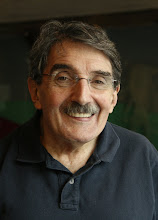
Silecchio, Twice
Rick Silecchio plays guitar with the Jim Small Band. Maybe forever.
“As I sit here in Afghanistan and peruse the band website, I remember the most amazing experience of my life, not just with Jim Small, I mean ever, so here it is for you to read.
“For those of you who can’t put the names together, its not cosmic co-incidence that me and the bearded wonder of a guitarist have the same name, the one you all call ‘Slick.’
“I happen to call him, Dad.
“I’ve been playing drums since being influenced by listening to the old [Jim Small Band] tapes and hearing Phil Cimino and his younger and marginally insane brother, Vinny, play […drums for the Jim Small Band. One Cimino succeeded the other.].
“I’m 22, now, so it’s been about 15 years since the first time I picked up a pair of sticks and started hitting stuff in a concerted effort to make noise into music.
“After a while I started to get pretty good and would be treated to sitting in a rehearsals and being made an honorary part of the band for a little while.
“Over the years the band started to become family, and seeing the guys was like having a large number of Uncles come over on Saturday nights and play me a private concert in my basement.
“Life was good...to the point where I would stay in on weekends just to sit and listen, which in time paid off, because Vinny became a huge influence on how I played.
“I watched his uncanny ability to stay in the pocket and adjust the dynamics, all the while still performing complex fills; or, on the other hand, leave larger than normal pauses in the rhythm, all the while keeping the time, and not overpowering the band, and becoming a showboater.
“Life was better.
“Then 3 weeks before I shipped out for basic training for the army, I got my chance. I was allowed to sit in with the band for half a set on stage at Mulcahy's in Wantaugh.
“For some kids this probably wouldn't sound appealing on a Saturday night, but for me, this was the World Series, the Super Bowl, and the World Cup all rolled into one.
“We started off easy with, ‘Mary Jane,’ and rolled into a song with a name I can’t remember but it was a blast to play. Then we hit up: ‘Your Baby Used To Be Me.’ And then I was loose, no longer trembling at the fact that I was 18 and on stage with guys who’d been playing together for longer than I was alive.
“That being said, Phil Reilly and Mike Guido were like second fathers to me. Vinny was like a wacky older brother, slippin’ me shots before the show, and sneaking me Marlboros to calm down.
“Bobby and [Jimmy Varelas, The] Greek were always there with quick, witty lines to make me laugh, and Jimmy was just Jimmy, always there with support.
“After that song Dad looked at me and said something that would stick with me for the rest of my life.
‘“I love you son, but don’t [Mess] this up.’
“I then began to count off, ‘Kill the Pain.’ The first part of the song, I’m a nervous wreck, but having listened to that song so much as a kid, I can pretty much play it in a coma.
“We hit John's solo [singer John Boyle plays the tenor saxophone, (…well, and the piccolo, and the harmonica)] and I loosened up and really started playing.
“Then it gets quiet, Dad walks out front a little to my right, the crowd goes nuts and he turns around and smiles at me a smile that loaded me with enough confidence to conquer a small country by myself, as if he was thinking to himself, ‘That’s my son, this is great.’
“I was happier than a kid on Christmas. We rolled into his solo slow, keeping it quiet, but playing to the crowd. He gets a little louder, and I answer with controlled rimshots on the snare, and louder hits on the bass drum. Then he went into a riff that was the signal to kick it into high gear and rip the stage up.
“And oh man did we do just that. I caught a roll and made that set sound like a machine gun. I’d never played like this in my life. He looked up at me and simply nodded, telling me it was time to blow the roof off the place.
“Now we were playing to each other. The crowd being there was just a bonus. We went into the big Freebird-esque breakdown, and it’s safe to say I’m concentrating like I’m taking the SATs for the second time.
“I count, and I count, and I get to the downbeat, where we come back in, and I nail it. I almost wanted to cry, I was so happy.
“We play through the rest of the cuts and riffs, and it comes time to end. He walks in front of the set and holds his guitar up while I’m playing the last bit of life I’ve got in me through these sticks.
“I end the song and walk out from behind the set.
“The only hug that can compare to this one is when he watched me step off the plane after my first tour to Afghanistan. He hugged me so hard I thought I was going to die, but I didn’t care because if I did, it would be happily.
“I had just received a standing ovation on stage with my father. What son can say that?
“Life was amazing.”
Saturday, June 19, 2010


Still Here
Dear Arthur and Julia,
I am sure that in these paragraphs, I might be writing to only one person. Maybe one who’s sharing my sentences with a partner, but, one author, anyway.
I mention that because one of your earlier messages was signed, “Arthur and Julia.” And, I confess, at least now, something deep inside me cries out for even the idea of that: two people. Or, the hope of that. (No doubt the weddings starting up in my camp this week have something to do with it. Anyway, I’m going to go with both names.).
So, dear Arthur and Julia,
You really caught me with your last e-mail.
You said something so damnably simple; used a phrase that all of a sudden was so powerful, I couldn’t get it out of my head.
And then I couldn’t get out for all the times in my experience I may have missed it, or worse, dismissed it.
Then I just couldn’t get it out; couldn’t make it leave. I repeated it like it a new phrase in a new language, one that captured a way to say the highest compliment to somebody.
“…I am so very glad” you wrote, “you are still here….”
I think I felt foolish, or blind, when it struck me. I thought I’d tell you, just in case you thought I don’t think about it. I do think about it. Eventually, maybe I get it. I’m learning. Yours was like, maybe I heard it a hundred times, but, I never heard it before.
“I am so very glad you are still here.”
What a strange and wonderful clause.
I could make excuses. I mean, I probably have said a weaker version of that, and heard a weaker version in response a million times, maybe in shortened form: “Hey, glad to see you,” or, “Good to see you.” Maybe in longer form, when a person really wants to tell another person that it really, really is good to see him; uplifting, life-affirming, maybe, just what the doctor would have prescribed; and that he really wants anybody within earshot to know it:
“Hey, Eddie, damn glad to see you!” or, “You don’t how we looked forward to this!” or, “Gosh, it’s really good to see you.”
I say that a lot. And I mean it a lot, when I say it.
“Hey, I haven’t seen you guys since the last, ‘Paper Bag.’ Geez it’s good to see you.”
Or, “man, look at you. You know, I would have bet on the entire American Hotel sliding into the Corner Bar before I’d have expected you to be here for this. Wow. Man, it’s good to see you.”
I’ve said exactly that.
And that’s only when it’s, “good to see,” somebody. And it was good to see him, and I was really thrilled.
But this is different.
“I am so glad you are still here.”
And, of course, I am in this, specific life, where I occasionally shared intimate details of my 40-year-narrative with anywhere from two to upwards of a million readers.
(I’m still rather astounded at the gall of that. I can hear my mother and her sisters cackling: “Do you believe the gall, to say this.” Of course, my mother also was very proud to be the mother of all this gall. “You’ve got seeds, Ed. You’re out there saying something just under my consciousness, just out of reach, until you say it.”
And I say these things—especially the infuriating parts; or, the poignant parts…well, or…the funny parts; or the humiliating and embarrassing parts; the surprise parts, the proud parts, the painful parts…the scary parts—blissfully unashamed.
The strangeness of that is I reveal these things largely to un-introduced people—I never met you and you never met me—and you become very familiar people, even intimate people, because of what one of us says; or, the shared familiarity of what he/she says.
I suppose, the risk is mockery, but the reward is not-having-to-be-so-alone. I’ll take that.
Still, I didn’t get it, not until today.
The reason I think I stopped this time is a seemingly simple switch in emphasis. It was in front of me all time, and really should been have obvious to me all the time. I don’t know what made it so clear this morning, when it was not clear at all ever before.
I wonder, can a stroke, like, open some other passageways to the brain, or am I just thick?
You wrote, “I am so glad you are still here.”
I translated that somehow to mean a compliment to me, and not a statement of fact about you. What a dolt.
I say, or even think, “Thanks a lot,” or, “Thanks for saying that,” and thereby skirt, duck, or miss the whole point of what you just said.
You are so glad that I am still here; that I didn’t leave, yet.
That, alone, is a reason to live.
I am sure that in these paragraphs, I might be writing to only one person. Maybe one who’s sharing my sentences with a partner, but, one author, anyway.
I mention that because one of your earlier messages was signed, “Arthur and Julia.” And, I confess, at least now, something deep inside me cries out for even the idea of that: two people. Or, the hope of that. (No doubt the weddings starting up in my camp this week have something to do with it. Anyway, I’m going to go with both names.).
So, dear Arthur and Julia,
You really caught me with your last e-mail.
You said something so damnably simple; used a phrase that all of a sudden was so powerful, I couldn’t get it out of my head.
And then I couldn’t get out for all the times in my experience I may have missed it, or worse, dismissed it.
Then I just couldn’t get it out; couldn’t make it leave. I repeated it like it a new phrase in a new language, one that captured a way to say the highest compliment to somebody.
“…I am so very glad” you wrote, “you are still here….”
I think I felt foolish, or blind, when it struck me. I thought I’d tell you, just in case you thought I don’t think about it. I do think about it. Eventually, maybe I get it. I’m learning. Yours was like, maybe I heard it a hundred times, but, I never heard it before.
“I am so very glad you are still here.”
What a strange and wonderful clause.
I could make excuses. I mean, I probably have said a weaker version of that, and heard a weaker version in response a million times, maybe in shortened form: “Hey, glad to see you,” or, “Good to see you.” Maybe in longer form, when a person really wants to tell another person that it really, really is good to see him; uplifting, life-affirming, maybe, just what the doctor would have prescribed; and that he really wants anybody within earshot to know it:
“Hey, Eddie, damn glad to see you!” or, “You don’t how we looked forward to this!” or, “Gosh, it’s really good to see you.”
I say that a lot. And I mean it a lot, when I say it.
“Hey, I haven’t seen you guys since the last, ‘Paper Bag.’ Geez it’s good to see you.”
Or, “man, look at you. You know, I would have bet on the entire American Hotel sliding into the Corner Bar before I’d have expected you to be here for this. Wow. Man, it’s good to see you.”
I’ve said exactly that.
And that’s only when it’s, “good to see,” somebody. And it was good to see him, and I was really thrilled.
But this is different.
“I am so glad you are still here.”
And, of course, I am in this, specific life, where I occasionally shared intimate details of my 40-year-narrative with anywhere from two to upwards of a million readers.
(I’m still rather astounded at the gall of that. I can hear my mother and her sisters cackling: “Do you believe the gall, to say this.” Of course, my mother also was very proud to be the mother of all this gall. “You’ve got seeds, Ed. You’re out there saying something just under my consciousness, just out of reach, until you say it.”
And I say these things—especially the infuriating parts; or, the poignant parts…well, or…the funny parts; or the humiliating and embarrassing parts; the surprise parts, the proud parts, the painful parts…the scary parts—blissfully unashamed.
The strangeness of that is I reveal these things largely to un-introduced people—I never met you and you never met me—and you become very familiar people, even intimate people, because of what one of us says; or, the shared familiarity of what he/she says.
I suppose, the risk is mockery, but the reward is not-having-to-be-so-alone. I’ll take that.
Still, I didn’t get it, not until today.
The reason I think I stopped this time is a seemingly simple switch in emphasis. It was in front of me all time, and really should been have obvious to me all the time. I don’t know what made it so clear this morning, when it was not clear at all ever before.
I wonder, can a stroke, like, open some other passageways to the brain, or am I just thick?
You wrote, “I am so glad you are still here.”
I translated that somehow to mean a compliment to me, and not a statement of fact about you. What a dolt.
I say, or even think, “Thanks a lot,” or, “Thanks for saying that,” and thereby skirt, duck, or miss the whole point of what you just said.
You are so glad that I am still here; that I didn’t leave, yet.
That, alone, is a reason to live.
Wednesday, June 9, 2010
ALEXIS
ALEXIS
This is sort of cheating, or maybe it just feels that way. Ten years ago, I wrote a story very much like the one I write now, which feels like the cheating part.
It is the same story, just 10 years later.
The problems are the same, except maybe a little more complicated. The proposed solutions are pretty much the same—complicated, unsatisfactory, baffling, illogical, late, bureaucratic, infuriating, even cruel.
And, the efforts are the same—heartfelt, heartwarming, heroic; then, because none of them are coordinated or organized or official, a little unprofessional, too. And only temporary. And really inadequate. And they are worthy of a lot note than this, because you would think this situation and others like it—thousands of situations—couldn’t exist; just couldn’t be, wouldn’t be, in this world of expertise, promises, achievement, campaign, money, dedication.
Yet this situation is; it exists; it, “be’s,” and many variations of it continue to be; always; and always, always, always, it is.
So, same as 10 years ago, here is the story.
Lisa Cardinale was in her freshman year at Suffolk Community College when, on July 19, 1996, following a perfectly normal pregnancy, Lisa gave birth to Alexis, who weighed 7 pounds, 12 ounces and seemed fine, until three months later, when she suffered her first seizure.
Both arms flailed uncontrollably, and her legs froze in a 90-degree angle to her body. The family took her to the hospital, saw one specialist after another, saw a neurologist who prescribed an anti-seizure medication and jokingly said she shouldn’t drive, because the medication was for adults.
After the seizures, family member noticed that Alexis was cringing when in the presence of bright lights.
She didn’t look straight at people any more. She didn’t close her eyes any more. They consulted one doctor after another. They visited many different hospitals, from Stony Brook to New York University.
“Somebody in Queens Hospital put her on a ketogenic diet, a metabolic diet specifically for seizure control.” Mary Cardinale (Burke, now) said at the time. “It reduced them by about 90 percent.
“By that time, though, we had learned that she was microcephalic, which means she had a smaller than normal brain. At first, they thought she might be hydrocephalic, and they did spinal taps to relieve the pressure, but it turned out she wasn't hydrocephalic.
“She’s been misdiagnosed many times,” Mary Burke said. “She's had a bolt put into her brain to monitor brain waves. She's had open heart surgery to repair a large hole in her heart—this, by the way, after one pediatric cardiologist said there was nothing wrong with her heart. Another just refused to operate on her because he had no fatalities on his record and the baby had so many other problems. He said, ‘Why do you want to put her through heart surgery, anyway?’
“The point is,” Mary Burke told me 10 years ago, “there are things she needs. Not luxuries, but the kinds of things that might make it easier for us to care for her, or make her life just a little more comfortable for her. She's going to be 4 [now, 14]. She's outgrowing the regular car seat. We need a custom bed for her. She has her bath literally in sections on our kitchen counter. She's dead weight, and we will most likely need a hoist for her soon. And should we not take Alexis out of the house because no stroller can accommodate her safely any longer? Even something as simple and obvious as diapers, she'll always need diapers. The expense is tremendous.”
Mary Burke continued 10 years later: “She is now 13 and we are having our second fundraiser for her, [Sat. June 19, 2010 at the Holiday Inn Ballroom, Sunnyside Boulevard, Plainview, NY 11803, called, ‘The Love for Alexis Trust Fundraiser, A Night of Comedy’] because as you see, nothing changes. Alexis must have all her needs met, and as she gets older, it gets harder. We are hoping you may mention this to your readers.
“Alexis will be 14 this July 19th. She was finally diagnosed with Rett Syndrome, CDKL5 the most severe form. We are still carrying her, still changing her diapers, still feeding her. It is unreal. We are still battling for therapies.
“Alexis now lives 15 minutes from me in a house that is run by UCP. We get Alexis on weekends and holidays and visit her often to make sure that all things are running smoothly, which is important when your child is not living at home and has no voice to let you know how things are going. It is a sad life, but, we do the very best we can for our girl. We need a hydraulic lift in our house now for Alexis as I can no longer carry her nor can her mother.
“Alexis can't help herself at all in any way. We have had our bathroom adapted for her showers, we have a special shower chair and had doors put into her room so we can wheel her into our home. We bought a used and, yes, beat up van for her that I need that show, “Pimp My Ride’” to re-do this van as we cannot afford a newer model (the van is 1999 Ford), if you know any of those guys.
“We need ceiling lifts. The list goes on and that's why we need fundraisers for Alexis. Unless you are wealthy and we are not, we cannot do these things for Alexis and we need to have her with us as she is our girl. Ed, Alexis is like having a real live angel in our lives that gives us the strength to go on and we are blessed to have her in our lives, but, we need help. Thanks to you for your help.”
Write this down: “The Love for Alexis Supplemental Needs Trust P.O. Box 2701, North Babylon, NY 11703.”
This is sort of cheating, or maybe it just feels that way. Ten years ago, I wrote a story very much like the one I write now, which feels like the cheating part.
It is the same story, just 10 years later.
The problems are the same, except maybe a little more complicated. The proposed solutions are pretty much the same—complicated, unsatisfactory, baffling, illogical, late, bureaucratic, infuriating, even cruel.
And, the efforts are the same—heartfelt, heartwarming, heroic; then, because none of them are coordinated or organized or official, a little unprofessional, too. And only temporary. And really inadequate. And they are worthy of a lot note than this, because you would think this situation and others like it—thousands of situations—couldn’t exist; just couldn’t be, wouldn’t be, in this world of expertise, promises, achievement, campaign, money, dedication.
Yet this situation is; it exists; it, “be’s,” and many variations of it continue to be; always; and always, always, always, it is.
So, same as 10 years ago, here is the story.
Lisa Cardinale was in her freshman year at Suffolk Community College when, on July 19, 1996, following a perfectly normal pregnancy, Lisa gave birth to Alexis, who weighed 7 pounds, 12 ounces and seemed fine, until three months later, when she suffered her first seizure.
Both arms flailed uncontrollably, and her legs froze in a 90-degree angle to her body. The family took her to the hospital, saw one specialist after another, saw a neurologist who prescribed an anti-seizure medication and jokingly said she shouldn’t drive, because the medication was for adults.
After the seizures, family member noticed that Alexis was cringing when in the presence of bright lights.
She didn’t look straight at people any more. She didn’t close her eyes any more. They consulted one doctor after another. They visited many different hospitals, from Stony Brook to New York University.
“Somebody in Queens Hospital put her on a ketogenic diet, a metabolic diet specifically for seizure control.” Mary Cardinale (Burke, now) said at the time. “It reduced them by about 90 percent.
“By that time, though, we had learned that she was microcephalic, which means she had a smaller than normal brain. At first, they thought she might be hydrocephalic, and they did spinal taps to relieve the pressure, but it turned out she wasn't hydrocephalic.
“She’s been misdiagnosed many times,” Mary Burke said. “She's had a bolt put into her brain to monitor brain waves. She's had open heart surgery to repair a large hole in her heart—this, by the way, after one pediatric cardiologist said there was nothing wrong with her heart. Another just refused to operate on her because he had no fatalities on his record and the baby had so many other problems. He said, ‘Why do you want to put her through heart surgery, anyway?’
“The point is,” Mary Burke told me 10 years ago, “there are things she needs. Not luxuries, but the kinds of things that might make it easier for us to care for her, or make her life just a little more comfortable for her. She's going to be 4 [now, 14]. She's outgrowing the regular car seat. We need a custom bed for her. She has her bath literally in sections on our kitchen counter. She's dead weight, and we will most likely need a hoist for her soon. And should we not take Alexis out of the house because no stroller can accommodate her safely any longer? Even something as simple and obvious as diapers, she'll always need diapers. The expense is tremendous.”
Mary Burke continued 10 years later: “She is now 13 and we are having our second fundraiser for her, [Sat. June 19, 2010 at the Holiday Inn Ballroom, Sunnyside Boulevard, Plainview, NY 11803, called, ‘The Love for Alexis Trust Fundraiser, A Night of Comedy’] because as you see, nothing changes. Alexis must have all her needs met, and as she gets older, it gets harder. We are hoping you may mention this to your readers.
“Alexis will be 14 this July 19th. She was finally diagnosed with Rett Syndrome, CDKL5 the most severe form. We are still carrying her, still changing her diapers, still feeding her. It is unreal. We are still battling for therapies.
“Alexis now lives 15 minutes from me in a house that is run by UCP. We get Alexis on weekends and holidays and visit her often to make sure that all things are running smoothly, which is important when your child is not living at home and has no voice to let you know how things are going. It is a sad life, but, we do the very best we can for our girl. We need a hydraulic lift in our house now for Alexis as I can no longer carry her nor can her mother.
“Alexis can't help herself at all in any way. We have had our bathroom adapted for her showers, we have a special shower chair and had doors put into her room so we can wheel her into our home. We bought a used and, yes, beat up van for her that I need that show, “Pimp My Ride’” to re-do this van as we cannot afford a newer model (the van is 1999 Ford), if you know any of those guys.
“We need ceiling lifts. The list goes on and that's why we need fundraisers for Alexis. Unless you are wealthy and we are not, we cannot do these things for Alexis and we need to have her with us as she is our girl. Ed, Alexis is like having a real live angel in our lives that gives us the strength to go on and we are blessed to have her in our lives, but, we need help. Thanks to you for your help.”
Write this down: “The Love for Alexis Supplemental Needs Trust P.O. Box 2701, North Babylon, NY 11703.”
Thursday, June 3, 2010
Short Term
Short Term
The short-term memory (even the normal short-memory), works two ways, almost as if by intent.
Annoying thoughts that a stroke-patient doesn’t yet need tend to occur abruptly, and then disappear just when he/she has found a use for them.
It is really more disconcerting than the more obvious changes, like being unable to use a right arm, or kick a person when he’s down, or enunciate, “illogical,” which I now and then do, but with unpredictable success. (I don’t think I’ve kicked anybody, but I don’t recall using my right arm, either.).
Non-stroke men and woman of a surprisingly early age swear to me that this phenomenon happens to them, too, this short term memory hiccough, but I am skeptical.
Maybe it happens to them once a week. Maybe three times a week, tops. I am inclined to believe that more frequency than that would have made all conversations cease long ago.
To begin with, it happens to me whenever I want to say, “Hello,” to someone. I remember the person’s name when I have started the, “Hell…” but because I have this fixation with saying “l’s,” correctly, I’ve forgotten the name by the time I get to the, “lo!”
So: “Hel…lo (…Frammis…Punch Bottbully…Whatever.).”
Multi-tasking evidently is the first to go in a stroke, anyway. I remember experiencing it early on, though I didn’t know what it was, yet.
Well, I didn’t know what anything was.
I think I first noticed that I could not talk while walking. There probably were other examples, but none so graphic as to make me fall down. The subject of the conversation would change, real quick. So, I would get lost, trying to remember something nobody now had any use for, because a man had fallen down.
It stands to reason, now, when I think of it, which I damn well better do, or draw unwanted attention to myself.
I had to move both my legs, balance a dead half-body, watch that curb, be aware of the pothole at the top of the hill, be careful of the car door, all without falling, and somebody wanted to know what I thought of the dark-haired skinny kid we saw in, “Rent,” in Northport. Could they be kidding me? Was there ever a time when I could do all that?
Then, first names: Generally speaking, I now begin to remember a man’s first name when that person says, “Hello, how are you? You look good. Really.” Then, I’m on: and the name disappears.
“Yes,” I manage to get out. And he walks off.
“That was Tom,” I think to myself, late. “Oh. This is Tom’s wife, Hilde...”
“Tom,” the man whose name I’ve triumphantly trapped, is fetching a beer, no doubt. While my mouth is still formulating, “Tom,” my brain promptly whisks, “Hildle,” away because it is pushing, “Tom,” away. But I am looking at a fabulously familiar face and say to Tom’s wife, Hildegarde, “Hi, Bruce!”
“Bruce?” We look at each other.
“Yeah, I don’t know where that came from. I was thinking of Tom, your husband.”
She’s gone by the time I get that out, so, I don’t know whether I got it out. It could still be trapped in my imagination.
Or, when I refer to a specific person, whose name begins to slip out the back as soon as I think of him; or, when I make an aside comment about a guy, that, worse, would be enchantingly funny, if I had remembered the name; or, when I use one as a backup example, saying something like, “I’m not kidding. Just talk to…oh, hell, he was there… (uh…blank…BLANK)…my…(…blank). He was there!”
I sound as if nobody I know actually was there, or where there was, and people are trying to spare me from embarrassing myself, now, by leaving.
(My mind takes on a defensive mind of its own, again, imagining: “Maybe you think I wasn’t there because I can’t remember—that guy’s name I was talking about—but I’ll tell you, he’ll tell you: I was there!”).
Nobody is listening, because why would they?
It happens alone, too.
Suddenly, I couldn’t get the name, “Stephanie,” out of my head. I knew its origin, which was an improvement, over all, but I didn’t need it then. I didn’t need it all through April or May. Why does it insist on being at the forefront of my thoughts now, in June?
I was trying to dial a number to get another number for a haircutter named, “Dawn,” when the name, “Stephanie,” danced across the stage of my brain. It cut in front of, “Dawn,” and threatened to make, “Dawn,” disappear.
“Stephanie,” was the name of the woman who for the last two years has cut my hair. I knew for some reason that Stephanie was unavailable. Why would she, now, be elbowing Dawn out of my mind.
I would say, “Typical for, ‘Stephanie,’ to do that when she isn’t around.”
But she has nothing to do with it. Neither did Dawn. Neither one even knows about it. My brain is doing it; my brain is having a ball doing it. My brain is getting back at me for whatever I did that I don’t remember.
The Free 411phone service was just about to come on, for the seventh time, after the unrelenting Optimum Online commercial, which was getting real old. I was to say, “Residence,” then wait, then say, “Meville, New York,” then say, “Brad Hores” (and not, Dawn O’Keefe Hores, the person I wanted to speak to. I really like Brad, but I don’t want him going near my hair with anything sharp. Or, for that matter, any of his colleague firefighters and their sharp things.).
Anyway, the name Stephanie barged in, took the names, “Dawn,” and, “Brad,” out, and trashed the name, “Melville,” which didn’t matter because the computer didn’t get the long, arduously rehearsed, enunciated rendition of, “Melville,” anyway. And I hung up, again.
My phone rang. I didn’t even know what to do. I started punching it, pressing button after button, until I heard, “Ed? Ed?” In my ear.
I looked at the phone, remembering (suddenly) that I had a blue tooth in my ear (!). I said, “Hello?” to no instrument, to nobody I could see. “Hello?”
“Ed? Ed? This is Dawn. How are you?”
I don’t what kept me from sobbing.
The short-term memory (even the normal short-memory), works two ways, almost as if by intent.
Annoying thoughts that a stroke-patient doesn’t yet need tend to occur abruptly, and then disappear just when he/she has found a use for them.
It is really more disconcerting than the more obvious changes, like being unable to use a right arm, or kick a person when he’s down, or enunciate, “illogical,” which I now and then do, but with unpredictable success. (I don’t think I’ve kicked anybody, but I don’t recall using my right arm, either.).
Non-stroke men and woman of a surprisingly early age swear to me that this phenomenon happens to them, too, this short term memory hiccough, but I am skeptical.
Maybe it happens to them once a week. Maybe three times a week, tops. I am inclined to believe that more frequency than that would have made all conversations cease long ago.
To begin with, it happens to me whenever I want to say, “Hello,” to someone. I remember the person’s name when I have started the, “Hell…” but because I have this fixation with saying “l’s,” correctly, I’ve forgotten the name by the time I get to the, “lo!”
So: “Hel…lo (…Frammis…Punch Bottbully…Whatever.).”
Multi-tasking evidently is the first to go in a stroke, anyway. I remember experiencing it early on, though I didn’t know what it was, yet.
Well, I didn’t know what anything was.
I think I first noticed that I could not talk while walking. There probably were other examples, but none so graphic as to make me fall down. The subject of the conversation would change, real quick. So, I would get lost, trying to remember something nobody now had any use for, because a man had fallen down.
It stands to reason, now, when I think of it, which I damn well better do, or draw unwanted attention to myself.
I had to move both my legs, balance a dead half-body, watch that curb, be aware of the pothole at the top of the hill, be careful of the car door, all without falling, and somebody wanted to know what I thought of the dark-haired skinny kid we saw in, “Rent,” in Northport. Could they be kidding me? Was there ever a time when I could do all that?
Then, first names: Generally speaking, I now begin to remember a man’s first name when that person says, “Hello, how are you? You look good. Really.” Then, I’m on: and the name disappears.
“Yes,” I manage to get out. And he walks off.
“That was Tom,” I think to myself, late. “Oh. This is Tom’s wife, Hilde...”
“Tom,” the man whose name I’ve triumphantly trapped, is fetching a beer, no doubt. While my mouth is still formulating, “Tom,” my brain promptly whisks, “Hildle,” away because it is pushing, “Tom,” away. But I am looking at a fabulously familiar face and say to Tom’s wife, Hildegarde, “Hi, Bruce!”
“Bruce?” We look at each other.
“Yeah, I don’t know where that came from. I was thinking of Tom, your husband.”
She’s gone by the time I get that out, so, I don’t know whether I got it out. It could still be trapped in my imagination.
Or, when I refer to a specific person, whose name begins to slip out the back as soon as I think of him; or, when I make an aside comment about a guy, that, worse, would be enchantingly funny, if I had remembered the name; or, when I use one as a backup example, saying something like, “I’m not kidding. Just talk to…oh, hell, he was there… (uh…blank…BLANK)…my…(…blank). He was there!”
I sound as if nobody I know actually was there, or where there was, and people are trying to spare me from embarrassing myself, now, by leaving.
(My mind takes on a defensive mind of its own, again, imagining: “Maybe you think I wasn’t there because I can’t remember—that guy’s name I was talking about—but I’ll tell you, he’ll tell you: I was there!”).
Nobody is listening, because why would they?
It happens alone, too.
Suddenly, I couldn’t get the name, “Stephanie,” out of my head. I knew its origin, which was an improvement, over all, but I didn’t need it then. I didn’t need it all through April or May. Why does it insist on being at the forefront of my thoughts now, in June?
I was trying to dial a number to get another number for a haircutter named, “Dawn,” when the name, “Stephanie,” danced across the stage of my brain. It cut in front of, “Dawn,” and threatened to make, “Dawn,” disappear.
“Stephanie,” was the name of the woman who for the last two years has cut my hair. I knew for some reason that Stephanie was unavailable. Why would she, now, be elbowing Dawn out of my mind.
I would say, “Typical for, ‘Stephanie,’ to do that when she isn’t around.”
But she has nothing to do with it. Neither did Dawn. Neither one even knows about it. My brain is doing it; my brain is having a ball doing it. My brain is getting back at me for whatever I did that I don’t remember.
The Free 411phone service was just about to come on, for the seventh time, after the unrelenting Optimum Online commercial, which was getting real old. I was to say, “Residence,” then wait, then say, “Meville, New York,” then say, “Brad Hores” (and not, Dawn O’Keefe Hores, the person I wanted to speak to. I really like Brad, but I don’t want him going near my hair with anything sharp. Or, for that matter, any of his colleague firefighters and their sharp things.).
Anyway, the name Stephanie barged in, took the names, “Dawn,” and, “Brad,” out, and trashed the name, “Melville,” which didn’t matter because the computer didn’t get the long, arduously rehearsed, enunciated rendition of, “Melville,” anyway. And I hung up, again.
My phone rang. I didn’t even know what to do. I started punching it, pressing button after button, until I heard, “Ed? Ed?” In my ear.
I looked at the phone, remembering (suddenly) that I had a blue tooth in my ear (!). I said, “Hello?” to no instrument, to nobody I could see. “Hello?”
“Ed? Ed? This is Dawn. How are you?”
I don’t what kept me from sobbing.
Friday, May 28, 2010
Stroke Cut Call
Stroke Cut Call
I don’t know why, but I was convinced one morning recently that I needed a haircut.
Such conviction is not normally worthy of discussion or attention, and I wouldn’t normally pay attention to it, let alone bother someone else with it, but my little world is different, now. It has been amended by a stroke.
I don’t why I keep forgetting that. It’s a reality I am learning about daily. Who knows, maybe one day, when I get the hang of it, I could teach it; Stroke 101.
I am discovering, day by day, that a stroke alters one’s perception of what, “normal,” is. Is fact, a stroke should come with a warning; “Be careful of, ‘Normal.’ It’s likely a trap.”
“Normal,” is not that for me any more. Invariably, it comes as a surprise, almost every time.
The best, as far as expectations go is, “approximately,” normal. The worst—well, I don’t think I’ve seen the worst. But to paraphrase one of my sons—the worst would have to be, “really [messed] up.” Maybe, “really, really [messed] up.”
My son used that on my mother last fall. She was 89 and had been dying for—oh, I don’t know, long enough that the funny lines were getting really competitive. By then we were delivering lines about short-circuiting her combined defibrillator-pacemaker, because every time she died, it woke her up.
“Jesus, am I still here?” she would say.
Jed arrived from Florida. He abruptly said: “Oh, man, Grandma, you really look [messed] up!”
The simple beauty of it tore the house down. I was sure she would die laughing after that. Of course, she waited for someone to top it.
So, I needed a haircut. I needed one desperately, which in itself, is not normal. “Desperation” and “haircut,” were never words that appeared together in a sentence of my construction.
If they did, however (“desperate,” and, “haircut,”), two years ago, I would have walked into the upstairs bathroom, taken the comb and the small, blue haircutting scissors (presented to me by a professional haircutter, as a testament to my self-haircutting prowess), and had at my head.
Well, I’m right-handed. My right hand now doesn’t budge. My left hand never has seen scissors. I certainly don’t want it experimenting near my head.
Plus, I can’t get to the upstairs bathroom, because my whole right side won’t accompany my left up the stairs. Something about a strike. Maybe, a stroke.
I am home, alone, which is no big deal—in fact, I find that I like it—but there is no car to get to a haircutter. Remember: “One thing at a time.” Driving a car is about, well, twenty-three, on the list. I am still working on five; getting up by myself. (One and two were crucial, especially for an insufferably modest Irish-Catholic male.).
“Ooooh!” I thought. “I have a phone. Aha!”
And I had the name, Dawn O’Keefe Hores, in my head, for the first time—not the lady who cuts my hair but a haircutter, nonetheless.
I couldn’t believe the names were suddenly there. Dawn O’Keefe Hores is a friend. Friends’ names drift in when you don’t have any occasion to use them—like, say, you’re eating spinach—and drift out when you do. (This is from Stroke 101.). She gave me the blue scissors. She said she would love to come one day a give me a haircut. I would call Dawn.
I knew there was a function on my phone that said, “Free Information.” Or was it, “Free 411.” I don’t often dial out. It’s a one-handed thing. It’s a right-handed-one-handed thing. I would soon learn that it was a right-handed-one-handed-automated-voice-activated-too-fast-with-the-questions-don’t-hang-up-give-me-a-freaking-break thing.
Free 411 has commercials. All right, no problem. But the commercial for Verizon…or, was it Optimun…stole, “Hores,” as in, “Dawn O’Keefe Hores,” from my head. I couldn’t remember her last name. Bad news, I hung up.
Then, “Free 411,” is completely automated. So, first I answer, “residence,” and it corrects me: “Residential.”
“Sorry.” Now, I’m apologizing to a machine, which is not listening. It’s on to the next item…
“City and State, please.”
“Uhh…oh…Wait. Melv…”
“City and State, please.”
“Oh, of course…uh…” And I hung up, which took a while, now, to remember how to do. Nerves.
Okay, start again. First, I jot down her husband’s name, because Automaton is going to ask: “‘Brad…’ Oh, come on! I know his last name. He’s a fireman, I can see his face. I can see his truck. Big truck.”
How am I going to ask her number without her husband’s first name.
“Hores. Hores.” Write that down…oh, yeah…lefty…dammit…The ‘H’ looked like a ‘4.’
“City and State please.”
“Hores…I mean, no, Melvil…”
“City and State please..”
“Melville, New York.” (YEAH! Ta da!)
“Farmington, New York?”
“What? No. No, Farmington?…No, Melv…”
“What listing in Farmington, New York?”
“What? No…uh…Dawn O’Keefe…oh brother…Brad…I don’t remember…”
I would write, “Click,” but I really pressed every button on the phone. It’s really a good thing no one was home. I’d be getting my strait jacket off about now.
This is obviously not over, yet…cont’d
I don’t know why, but I was convinced one morning recently that I needed a haircut.
Such conviction is not normally worthy of discussion or attention, and I wouldn’t normally pay attention to it, let alone bother someone else with it, but my little world is different, now. It has been amended by a stroke.
I don’t why I keep forgetting that. It’s a reality I am learning about daily. Who knows, maybe one day, when I get the hang of it, I could teach it; Stroke 101.
I am discovering, day by day, that a stroke alters one’s perception of what, “normal,” is. Is fact, a stroke should come with a warning; “Be careful of, ‘Normal.’ It’s likely a trap.”
“Normal,” is not that for me any more. Invariably, it comes as a surprise, almost every time.
The best, as far as expectations go is, “approximately,” normal. The worst—well, I don’t think I’ve seen the worst. But to paraphrase one of my sons—the worst would have to be, “really [messed] up.” Maybe, “really, really [messed] up.”
My son used that on my mother last fall. She was 89 and had been dying for—oh, I don’t know, long enough that the funny lines were getting really competitive. By then we were delivering lines about short-circuiting her combined defibrillator-pacemaker, because every time she died, it woke her up.
“Jesus, am I still here?” she would say.
Jed arrived from Florida. He abruptly said: “Oh, man, Grandma, you really look [messed] up!”
The simple beauty of it tore the house down. I was sure she would die laughing after that. Of course, she waited for someone to top it.
So, I needed a haircut. I needed one desperately, which in itself, is not normal. “Desperation” and “haircut,” were never words that appeared together in a sentence of my construction.
If they did, however (“desperate,” and, “haircut,”), two years ago, I would have walked into the upstairs bathroom, taken the comb and the small, blue haircutting scissors (presented to me by a professional haircutter, as a testament to my self-haircutting prowess), and had at my head.
Well, I’m right-handed. My right hand now doesn’t budge. My left hand never has seen scissors. I certainly don’t want it experimenting near my head.
Plus, I can’t get to the upstairs bathroom, because my whole right side won’t accompany my left up the stairs. Something about a strike. Maybe, a stroke.
I am home, alone, which is no big deal—in fact, I find that I like it—but there is no car to get to a haircutter. Remember: “One thing at a time.” Driving a car is about, well, twenty-three, on the list. I am still working on five; getting up by myself. (One and two were crucial, especially for an insufferably modest Irish-Catholic male.).
“Ooooh!” I thought. “I have a phone. Aha!”
And I had the name, Dawn O’Keefe Hores, in my head, for the first time—not the lady who cuts my hair but a haircutter, nonetheless.
I couldn’t believe the names were suddenly there. Dawn O’Keefe Hores is a friend. Friends’ names drift in when you don’t have any occasion to use them—like, say, you’re eating spinach—and drift out when you do. (This is from Stroke 101.). She gave me the blue scissors. She said she would love to come one day a give me a haircut. I would call Dawn.
I knew there was a function on my phone that said, “Free Information.” Or was it, “Free 411.” I don’t often dial out. It’s a one-handed thing. It’s a right-handed-one-handed thing. I would soon learn that it was a right-handed-one-handed-automated-voice-activated-too-fast-with-the-questions-don’t-hang-up-give-me-a-freaking-break thing.
Free 411 has commercials. All right, no problem. But the commercial for Verizon…or, was it Optimun…stole, “Hores,” as in, “Dawn O’Keefe Hores,” from my head. I couldn’t remember her last name. Bad news, I hung up.
Then, “Free 411,” is completely automated. So, first I answer, “residence,” and it corrects me: “Residential.”
“Sorry.” Now, I’m apologizing to a machine, which is not listening. It’s on to the next item…
“City and State, please.”
“Uhh…oh…Wait. Melv…”
“City and State, please.”
“Oh, of course…uh…” And I hung up, which took a while, now, to remember how to do. Nerves.
Okay, start again. First, I jot down her husband’s name, because Automaton is going to ask: “‘Brad…’ Oh, come on! I know his last name. He’s a fireman, I can see his face. I can see his truck. Big truck.”
How am I going to ask her number without her husband’s first name.
“Hores. Hores.” Write that down…oh, yeah…lefty…dammit…The ‘H’ looked like a ‘4.’
“City and State please.”
“Hores…I mean, no, Melvil…”
“City and State please..”
“Melville, New York.” (YEAH! Ta da!)
“Farmington, New York?”
“What? No. No, Farmington?…No, Melv…”
“What listing in Farmington, New York?”
“What? No…uh…Dawn O’Keefe…oh brother…Brad…I don’t remember…”
I would write, “Click,” but I really pressed every button on the phone. It’s really a good thing no one was home. I’d be getting my strait jacket off about now.
This is obviously not over, yet…cont’d
Sunday, May 23, 2010
Beer
Beer
I was waiting for Rudolph Schaffer.
He had recently just taken the reins of his father’s and grandfather’s F.& M. Schaffer brewing company, which in 1973 was on Kent Avenue, in Brooklyn, New York, where it had been for quite some time.
I was writing a story about beer. Me. It was to be called, “Beer, I Love You.”
(I kid you not. This has always been the best job.).
I still couldn’t believe my luck, in choosing this second profession, in the hope of forging my way through this life without performing anything like work. I was, maybe, 26, and had been writing newspaper stories for three years, ever since I had left teaching, which I also loved.
The problem with teaching was that it required starting all over with the same stuff every year, for 30 or so years. That frightened me. What if, after the 17th year, I was bored?
Reporting introduced you to a new skill every week, and you didn’t have to learn it, just learn enough to get somebody else to explain it.
It made me giddy to think that I was getting paid to write about beer.
It already had gone around the office that I loved beer. So, what did they do but assign a reporter who loved beer to write about beer. It was unheard of, this journalism; exactly the opposite of what my father told me the Army would do. The Army would assign a guy who loved beer a job where he blew up breweries. The guy would go to his bunk each night in tears. .
At an editor’s urging (Think of it; at an editor’s urging!), I already had interviewed Ivo Havlacek, the fifth Havlacek to preside over the brewery in Pilzn, Czechoslovakia, where they made a beer called Pilsner Urquell (in American), or, loosely translated, “Pilzn from the original source.” It was the acknowledged, “King of Beers,” the finest beer in the world, the finest beer in history, the first laagered beer, golden beer.
When The Kremlin rolled tanks all over Czechoslovakia, the communist government had approached Ivo’s father, Ivo, and said, “You will make more Pilzn beer!” I guess they thought Ivo’s father would snap to it.
“Not so fast!” said Ivo’s father, instantly making himself a National Hero.
(I love this story. Ivo Jr. told me it, through a Russian interpreter, no less, on a marketing visit to The States.).
“What?” the Kremlin guys said.
Ivo’s father said: “The law of this land, going back to 1292, through all the political upheavals, says Pilzn beer has to be aged in limestone caves. Any brewmeister who violates that rule is to be tarred and feathered and run out of Pilzn, by Bavarian law, whatever the ruling country is. There are 22 miles of limestone caves under Pilzn. You want more beer, you find more limestone caves.”
Whoa. The guys from the Kremlin did not know what to do. But they had to do something, or they would lose face. They decided to market Pilzn beer in the United States, where it had been banned since the first World War. They would take it out of…some other country.
Meanwhile, I had to interview an American brewmeister to balance the Ivo Havlacek interview.
The closet beer brewer was Rudy Schaffer. I was to interview him, to ask him questions about his life, his business, the product, the family, the problems, the market, the past, the future; virtually anything and everything I could think of that satisfied my curiosity. Or, that satisfied the curiosity of persons who picked up a copy of Newsday and paged through it until their eyes landed on a full-page glass of beer with the words, ‘Beer, I Love You,” superimposed on it.
The interview went well enough. We went through the brewing process, saw single-file lines of 12 oz. bottles marched through the bottling process, with a bottle every so often rejected by a magical electrical eye that determined whether the bottle was too filled or not filled enough. It was fun.
I had forgotten that I was accompanied by a Newsday photographer, John Cornell. He saw this happen.
A stainless steel beer tap was mounted on the wall in Rudy’s office, next to the, “Stein Room,” where the Schaffer’s entertained brewmeisters and company executives from all over the world. It looked out of place, with the ancient table and the chairs carved by hand by coopers centuries ago.
I wanted to get Rudy Schaffer to say something about, “cleaning the coils,” from the barrels to the tap. Some saloon owners needed to know why I evaded their establishments. I brought up the subject, and the normally calm, business-like, Rudy Schaffer lit up into the likes of a raging bear.
“Do you know where that beer comes from?” he asked, not waiting for an answer. “The Barrel room, below here, where somebody taps a barrel from one of hundreds of barrels. Do you know what beer company executives say about that, ‘ordinary’ Schaffer beer?”
(I didn’t say a word.).
“They say, ‘Wow, Rudy. This is the best beer! What do you do, save it for private use?’
“It’s Schaffer beer, poured through a clean tap.”
“Really. Right out of that tap, there,” I said, not wanting to suggest anything. Aw, maybe.
“Yes. I cannot emphasize enough the importance of a clean system.”
“Brewmeisters from all over the world say that beer right out of that very tap, is the best they ever…”
“Yes. And it’s regular Schaffer beer.”
“Really. Wow. Right out of that tap, there…”
I saw Cornell out of the corner of my eye.
“Yep, right out of that tap.”
I gave it up. I never tasted the beer. I wrote the story, Schaffer moved to the LeHigh Valley, the beer changed, and I was uncorrupted, but not exactly by choice.
I was waiting for Rudolph Schaffer.
He had recently just taken the reins of his father’s and grandfather’s F.& M. Schaffer brewing company, which in 1973 was on Kent Avenue, in Brooklyn, New York, where it had been for quite some time.
I was writing a story about beer. Me. It was to be called, “Beer, I Love You.”
(I kid you not. This has always been the best job.).
I still couldn’t believe my luck, in choosing this second profession, in the hope of forging my way through this life without performing anything like work. I was, maybe, 26, and had been writing newspaper stories for three years, ever since I had left teaching, which I also loved.
The problem with teaching was that it required starting all over with the same stuff every year, for 30 or so years. That frightened me. What if, after the 17th year, I was bored?
Reporting introduced you to a new skill every week, and you didn’t have to learn it, just learn enough to get somebody else to explain it.
It made me giddy to think that I was getting paid to write about beer.
It already had gone around the office that I loved beer. So, what did they do but assign a reporter who loved beer to write about beer. It was unheard of, this journalism; exactly the opposite of what my father told me the Army would do. The Army would assign a guy who loved beer a job where he blew up breweries. The guy would go to his bunk each night in tears. .
At an editor’s urging (Think of it; at an editor’s urging!), I already had interviewed Ivo Havlacek, the fifth Havlacek to preside over the brewery in Pilzn, Czechoslovakia, where they made a beer called Pilsner Urquell (in American), or, loosely translated, “Pilzn from the original source.” It was the acknowledged, “King of Beers,” the finest beer in the world, the finest beer in history, the first laagered beer, golden beer.
When The Kremlin rolled tanks all over Czechoslovakia, the communist government had approached Ivo’s father, Ivo, and said, “You will make more Pilzn beer!” I guess they thought Ivo’s father would snap to it.
“Not so fast!” said Ivo’s father, instantly making himself a National Hero.
(I love this story. Ivo Jr. told me it, through a Russian interpreter, no less, on a marketing visit to The States.).
“What?” the Kremlin guys said.
Ivo’s father said: “The law of this land, going back to 1292, through all the political upheavals, says Pilzn beer has to be aged in limestone caves. Any brewmeister who violates that rule is to be tarred and feathered and run out of Pilzn, by Bavarian law, whatever the ruling country is. There are 22 miles of limestone caves under Pilzn. You want more beer, you find more limestone caves.”
Whoa. The guys from the Kremlin did not know what to do. But they had to do something, or they would lose face. They decided to market Pilzn beer in the United States, where it had been banned since the first World War. They would take it out of…some other country.
Meanwhile, I had to interview an American brewmeister to balance the Ivo Havlacek interview.
The closet beer brewer was Rudy Schaffer. I was to interview him, to ask him questions about his life, his business, the product, the family, the problems, the market, the past, the future; virtually anything and everything I could think of that satisfied my curiosity. Or, that satisfied the curiosity of persons who picked up a copy of Newsday and paged through it until their eyes landed on a full-page glass of beer with the words, ‘Beer, I Love You,” superimposed on it.
The interview went well enough. We went through the brewing process, saw single-file lines of 12 oz. bottles marched through the bottling process, with a bottle every so often rejected by a magical electrical eye that determined whether the bottle was too filled or not filled enough. It was fun.
I had forgotten that I was accompanied by a Newsday photographer, John Cornell. He saw this happen.
A stainless steel beer tap was mounted on the wall in Rudy’s office, next to the, “Stein Room,” where the Schaffer’s entertained brewmeisters and company executives from all over the world. It looked out of place, with the ancient table and the chairs carved by hand by coopers centuries ago.
I wanted to get Rudy Schaffer to say something about, “cleaning the coils,” from the barrels to the tap. Some saloon owners needed to know why I evaded their establishments. I brought up the subject, and the normally calm, business-like, Rudy Schaffer lit up into the likes of a raging bear.
“Do you know where that beer comes from?” he asked, not waiting for an answer. “The Barrel room, below here, where somebody taps a barrel from one of hundreds of barrels. Do you know what beer company executives say about that, ‘ordinary’ Schaffer beer?”
(I didn’t say a word.).
“They say, ‘Wow, Rudy. This is the best beer! What do you do, save it for private use?’
“It’s Schaffer beer, poured through a clean tap.”
“Really. Right out of that tap, there,” I said, not wanting to suggest anything. Aw, maybe.
“Yes. I cannot emphasize enough the importance of a clean system.”
“Brewmeisters from all over the world say that beer right out of that very tap, is the best they ever…”
“Yes. And it’s regular Schaffer beer.”
“Really. Wow. Right out of that tap, there…”
I saw Cornell out of the corner of my eye.
“Yep, right out of that tap.”
I gave it up. I never tasted the beer. I wrote the story, Schaffer moved to the LeHigh Valley, the beer changed, and I was uncorrupted, but not exactly by choice.
Wednesday, May 12, 2010
Dr. Seuss
Larry,
You stopped me at, “Dr. Suess.”
This is a real, strange development, and I will ask you to indulge me for a moment, because I spent a few hours searching my brain and my computer, and I am enjoying a tiny triumph, thanks to you.
In February of 1973, I trekked off to Romania with the Syosset High School Band, basically to write the story of the first American High School Band since, “The War,” to so visit. The memory of it is awash with other memories, which I am currently enjoying. So, thanks for that.
I developed a lot of friendships on that trip. The following spring, a telephone caller—I think to my home but I can’t swear to it—said that he (or she) was a member of the band who traveled throughout Romania last year and that there was a, “Hat Day,” at the Syosset High School that morning. A photographer and I would do well to see it.
I said, “Hat Day?” The caller hung up.
I called in a photo assignment and drove from my house in Amityville to meet with a Newsday photographer from the Garden City headquarters, to see what this, “Hat Day,” was about.
Well.
When I arrived at the office, all I could say was I had just been in an unwritten, live, Dr. Suess book. Everyone but the photographer and I were wearing hats, of all kinds, colors and shapes.
It all was about a, “protest,” by the entire student body (wise guys to nerds to jocks to princesses) against a policy barring hats in school. A, “Hat,” demonstration, in support of one kid (who years later became a famous dancer) named Doug Varrone. The principal got wind of it and decided that rather than fight it, the faculty, staff, administration and custodians would join in.
Two veteran journalists, Mike Unger and Kevin Lahart, told me later to write it, “Dr. Suess,” style.
But Newsday, too, had a policy. No news story had ever been written in verse in Newsday. One attempt, a parody of, “The Song of Hiawatha,” had been offered years before by not-yet-columnist Robert Mayor, but the copy desk crushed him by printing it as prose paragraphs and running it atop two other stories—a heartbreak to see.
Still, I wrote, for the next day’s newspaper:
Hat Day
By Ed Lowe May 17, 1974
Hat day declared. Hats were the rule
Hats on the heads of Syosset High School.
Hundreds of beanies, sombreros and caps,
Fedoras and fezzes and hats with ear flaps,
Wool hats and helmets, hat songs and games,
Mets hats and Jets hats and hats with no names.
To stop all this, now, would be such a shame
(And impossible, too, said Walter Yanette,
the principal.). He wore a silly hat, yet.
What started all this? What made it all go?
It started, said one kid, when someone said, ‘No.’
It started with Bemak...no, Feinstein...no, Doug.
Hey, couldn’t we keep all that under the rug?
Doug Varone, 17, in a writing class, see?
He wore a brown hat, like this one on me.
Walt Bemak, the chairman of English dropped in,
Told Feinstein, the teacher, ‘Doug’s hat is a sin.
‘He must take it off, Don. No hats on in school.
‘No shoes off—or hats on. That is the rule.’
‘I don’t mind it,’ said Feinstein;
don’t mind it at all.
‘It isn’t distracting. It isn’t too tall.
‘It isn’t too colorful. It stays on when he reads.
‘Maybe it’s part of him, something he needs.’
‘No good,’ answered Bemak. ‘This is a school.
A hat is no educational tool.
‘I don’t wish to be obstinate, cranky or cruel,
‘But, that hat has to go.
‘A rule is a rule.’
WELL, that’s all the rest of them wanted to know
They spread it around, for a month or so, slow
They organized HAT DAY.
They schemed and they planned
They even set up a parade with the band.
They had posters and streamers
and yellow pompoms,
Including a HAT CAKE from one of the moms.
Feinstein’s writing class did all their ads,
Wrote letters and papers concerning hat fads.
And contests they had
(They looked forward to that,
‘Cause Bemak was judging
HIMSELF IN A HAT!).
Custodians, nurses, typists and clerks
(To tell you the truth, they all looked like jerks.).
‘But what of tomorrow?’ I asked ‘Doc’ Yanette.
‘Tomorrow’s tomorrow. My mind is set.
‘Hat Day will be done
‘And a rule is a rule.
‘There will be no hats
In Syosset High School.’
Becky Clock was head of the copy desk. She laid it out with pictures atop, one showing Varrone with his signature hat, one showing the villain wearing a ladies hat. The copy was broken into stanzas, each one beginning with a huge, Seuss-ian capitol letter.
I got a lot of letters. Washington bureau reporter Myron Waldman, whom I would not meet for a year or two, sent a note consisting of comments by a half-dozen reporters covering the Watergate hearings. One of them, a Washington Post guy, said, “Newsday must be the only Newspaper in the country where you could write like that…if you could write like that.”
I unearthed the thing about twenty years ago, when I was speaking to an entire school over the public address system. I never rehearsed a speech in my life, but I wore the copy out, rehearsing that. The kids liked it.
Sorry I got so carried away. I still owe you a response on your stroke. You seem to have the right perspective. It’s always there. Keeps us appreciative.
ed
You stopped me at, “Dr. Suess.”
This is a real, strange development, and I will ask you to indulge me for a moment, because I spent a few hours searching my brain and my computer, and I am enjoying a tiny triumph, thanks to you.
In February of 1973, I trekked off to Romania with the Syosset High School Band, basically to write the story of the first American High School Band since, “The War,” to so visit. The memory of it is awash with other memories, which I am currently enjoying. So, thanks for that.
I developed a lot of friendships on that trip. The following spring, a telephone caller—I think to my home but I can’t swear to it—said that he (or she) was a member of the band who traveled throughout Romania last year and that there was a, “Hat Day,” at the Syosset High School that morning. A photographer and I would do well to see it.
I said, “Hat Day?” The caller hung up.
I called in a photo assignment and drove from my house in Amityville to meet with a Newsday photographer from the Garden City headquarters, to see what this, “Hat Day,” was about.
Well.
When I arrived at the office, all I could say was I had just been in an unwritten, live, Dr. Suess book. Everyone but the photographer and I were wearing hats, of all kinds, colors and shapes.
It all was about a, “protest,” by the entire student body (wise guys to nerds to jocks to princesses) against a policy barring hats in school. A, “Hat,” demonstration, in support of one kid (who years later became a famous dancer) named Doug Varrone. The principal got wind of it and decided that rather than fight it, the faculty, staff, administration and custodians would join in.
Two veteran journalists, Mike Unger and Kevin Lahart, told me later to write it, “Dr. Suess,” style.
But Newsday, too, had a policy. No news story had ever been written in verse in Newsday. One attempt, a parody of, “The Song of Hiawatha,” had been offered years before by not-yet-columnist Robert Mayor, but the copy desk crushed him by printing it as prose paragraphs and running it atop two other stories—a heartbreak to see.
Still, I wrote, for the next day’s newspaper:
Hat Day
By Ed Lowe May 17, 1974
Hat day declared. Hats were the rule
Hats on the heads of Syosset High School.
Hundreds of beanies, sombreros and caps,
Fedoras and fezzes and hats with ear flaps,
Wool hats and helmets, hat songs and games,
Mets hats and Jets hats and hats with no names.
To stop all this, now, would be such a shame
(And impossible, too, said Walter Yanette,
the principal.). He wore a silly hat, yet.
What started all this? What made it all go?
It started, said one kid, when someone said, ‘No.’
It started with Bemak...no, Feinstein...no, Doug.
Hey, couldn’t we keep all that under the rug?
Doug Varone, 17, in a writing class, see?
He wore a brown hat, like this one on me.
Walt Bemak, the chairman of English dropped in,
Told Feinstein, the teacher, ‘Doug’s hat is a sin.
‘He must take it off, Don. No hats on in school.
‘No shoes off—or hats on. That is the rule.’
‘I don’t mind it,’ said Feinstein;
don’t mind it at all.
‘It isn’t distracting. It isn’t too tall.
‘It isn’t too colorful. It stays on when he reads.
‘Maybe it’s part of him, something he needs.’
‘No good,’ answered Bemak. ‘This is a school.
A hat is no educational tool.
‘I don’t wish to be obstinate, cranky or cruel,
‘But, that hat has to go.
‘A rule is a rule.’
WELL, that’s all the rest of them wanted to know
They spread it around, for a month or so, slow
They organized HAT DAY.
They schemed and they planned
They even set up a parade with the band.
They had posters and streamers
and yellow pompoms,
Including a HAT CAKE from one of the moms.
Feinstein’s writing class did all their ads,
Wrote letters and papers concerning hat fads.
And contests they had
(They looked forward to that,
‘Cause Bemak was judging
HIMSELF IN A HAT!).
Custodians, nurses, typists and clerks
(To tell you the truth, they all looked like jerks.).
‘But what of tomorrow?’ I asked ‘Doc’ Yanette.
‘Tomorrow’s tomorrow. My mind is set.
‘Hat Day will be done
‘And a rule is a rule.
‘There will be no hats
In Syosset High School.’
Becky Clock was head of the copy desk. She laid it out with pictures atop, one showing Varrone with his signature hat, one showing the villain wearing a ladies hat. The copy was broken into stanzas, each one beginning with a huge, Seuss-ian capitol letter.
I got a lot of letters. Washington bureau reporter Myron Waldman, whom I would not meet for a year or two, sent a note consisting of comments by a half-dozen reporters covering the Watergate hearings. One of them, a Washington Post guy, said, “Newsday must be the only Newspaper in the country where you could write like that…if you could write like that.”
I unearthed the thing about twenty years ago, when I was speaking to an entire school over the public address system. I never rehearsed a speech in my life, but I wore the copy out, rehearsing that. The kids liked it.
Sorry I got so carried away. I still owe you a response on your stroke. You seem to have the right perspective. It’s always there. Keeps us appreciative.
ed
Subscribe to:
Posts (Atom)