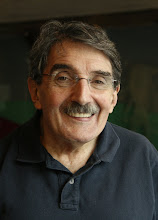
My Laugh.
I may not have been supposed to hear it: “I miss his laugh.”
I’d heard it before, but I didn’t know I was the subject laugher. Now that I think of it, I probably didn’t know what a subject was, or who was talking, or what state we were in. I just knew: I heard that before.
Also, I remember it distracting me in an off-beat way. It brought to mind my father, back in March of 1985, years ago, which still doesn’t seem that way. It was now 11or 13 hours into a three-hour coronary bypass operation. I deduced, brilliant son that I am, that the procedure was headed straight south, and my mother and I were about to lose a very, very good man.
I was 39, he, 69. We were as close as we were not demonstrative about it. I couldn’t imagine life without him, and now I had to.
I have been through just enough, now, that I am not surprised at what pops into my mind on such occasions, and I take care not to let anybody else know. It’s like noticing the crooked nails in a wall under demolition, and sympathizing with the agony of their discovery, after all those years. There they are, naked, supporting nothing.
It’s lunacy, I know. First of all—first, probably through tenth—it’s insane. Nails, especially, old, used nails, don’t get embarrassed. I think, for me, the distraction takes the edge off the destruction.
When my father died, I found myself saying, out of earshot of anyone, “God. I’m going miss his cough.” Now, who would think of that? But nobody else had that cough. You could hear it; pick it out of a hero cop’s funeral, anywhere. The whole world was going to live, forever, without that telltale cough.
Strange thought, I know, but, it helped.
He died. He’d done all the things he wanted, and—I knew more than anybody else—he was escaping the things he didn’t want; dependency, incontinence, blithering, and, mostly, being alive without my mother. At the time, I didn’t know he wanted to escape blithering, but I didn’t know exactly what blithering was, either. Now, I know. And I know that it would have been high up on his list of stages-of-decline, declined.
“Thanks, but I would prefer to skip over that blithering, if you…or…You don’t mind.”
I was right about the cough, too. I still miss it, twenty-five years later.
My laugh didn’t make any difference to me one way or the other, or so I thought. If the comment floated by while I was first realizing I was extent, I suppose I was too preoccupied with my changes: my suddenly lame leg, my dead right arm, my inability to make myself understood, my embarrassment and puzzlement about not going to the bathroom by myself, the split rail fence around my entire bed, which, which meant it was not my bed.
The inability to go the bathroom—by yourself, alone—will obscure the question of whether or not somebody misses your laugh, trust me.
But I overheard it again, more recently—which flies in the orbit of anywhere within the last 20 months or so, “I’m going to miss his laugh”—and it’s hung around the back of my mind, the corners, gables, the out-of-the-way-places, until suddenly—and, I know, everything is, “suddenly,” in this kind of out-of-the-blue stage of life, but it happened, right here, right now, really suddenly—it really made a difference to me. What happened to my laugh?
I missed my laugh. Funny, how that works.
Now, January, 20l0, I am different than I was, then, January, 2008 (Well, yeah. For one thing, I’m conscious.). And I am learning the differences differently, becoming conscious of them, at first subconsciously, and then, consciously-but-what’s-the-difference-really, and then, Wham! Consciously. “Okay. Wait a minute. Where’s my goddamed laugh?”
“Your what?”
(I have a tendency to make dialogue out of whatever goes on in my mind in these encounters.).
“My laugh, dammit! I miss my laugh.”
“You know, you’re alive…”
“Yeah Maybe. But maybe I don’t know that I’m alive. Maybe I’m not myself. I mean, where’s my laugh, if I’m who you say I am? I recall it being loud. I remember that. Not squeaky. Not snickery. Not smarmy. And, sudden; it was sudden. AHaHahaha!
“It snuck up fast on both me and you, and it made us both laugh harder, as if it had surprised both of us. It might have been obnoxious, come to think of it, but it was mine. I remember other people talking about it. I don’t know why I remember it, all of a sudden, but I do.
“I do remember it sometimes started out deep too…I remember Susan telling me that her son, Matt, said she had gotten a phone call while she was out. She said, ‘Yeah, from whom?’ He said, ‘I’m sorry, I forgot to ask, but he laughed, the guy who called, and it sounded like either, Dr. Cave, Barry White, or Ed Lowe.’”
“So, now,” my mind says to me, “your throat has hosted a sufficient quiver of vacuums and feeders and air-hoses and needles, and, don’t forget, you yanked them out, too...”
“Well, I’m told, yes…”
“And you throw in the pneumonia…”
“Well, yeah, but, Hell. My laugh?”
“The pipes are scarred, you know, and torn.”
“Can I tell you what I’m dealing with? I heard myself laughing when no one was home, and I stopped short, as if I’d driven over a sleeping kitten. ‘What was that? Who was that?’ It sounded like an air hose trying to operate by itself. A deflated set of piper’s pipes, alone, on the side of the road, after the parade. Ahee…cough…Ahee …What is that?”
“What do you care? You’re alive.”
“I don’t care. Maybe I don’t. But…what if Susan cares? What if she misses my laugh?”
“You’re crazy.”
“I am, no question. But, I’m going to find my laugh.”
Tuesday, February 23, 2010


Monday, February 15, 2010
Alan Placa II
by Ed Lowe
Alan Placa II
This apologetic essay is in a response to a letter I received from a reader with whom I essentially agree, though she doesn’t seem to see it that way, and…well…I suppose, points out a failure on my part to be clear.
I thought I was clear. I was mistaken.
I thought I was being Waterford Crystalline clear. I mean, bang the drum slowly clear; in your face clear (figuratively speaking, of course).
I will try again, with apologies to persons to whom the points were less than clear.
I should attempt to make my points, first, without any wise-ass remarks. It has been a problem of mine, anyway. “Smart,” remarks have a way of enhancing a point, but usually only among persons who already agree with you. And they have an intimidating way of dismissing anyone who disagrees with you.
“Smart” remarks also draw attention away from a point, as if you wanted to make the point, but wanted to be sure other, “smart,” people were supportive. Maybe the “smart” remarks obscure it.
I’ll bet I have done that. I apologize. I’d like to apologize for every time I’ve done that, but especially for this one. No, “smart remarks” this time.
Here is Msgr. Alan Placa, of the Diocese of Rockville Centre, Long Island, New York.
That is my subject.
He should not be a priest. That is my point.
In the last column, I referred to a former seminarian. This is not about a former seminarian. Forget about that. I mentioned personal behavior. That was flippant. This is not about the behavior of men or women; or boys or girls. Forget that.
The woman who wrote me got snagged by a distraction on that score, and I was at fault. I lost her in a reference I should not have made. Placa was investigated for another thing, and I mentioned it, and it had no bearing on my point.
I wrote to her, “Like your son, I was an altar server, too, and, like your son, never saw inappropriate behavior by any priest for all the years I was at St. Martin of Tours Church, in Amityville, or, for that matter, during my four years in St. Pius X Prep. Seminary (1959—1963). Not one.
“My father was a cop,” I wrote, “like your husband. I would have no problem getting the police involved in such a situation either. In fact, I agree with you whole-heartedly there.”
And, priests are human, and deserve mercy, and the benefit of the doubt, and ultimately, understanding, and I will agree with you there, too.
Msgr. Alan Placa is human, deserves mercy, the benefit of the doubt, and, ultimately, understanding.
But, he should not be a priest.
Praying in public, wearing priestly clothes, greeting people genuinely, kindly, affectionately, a priest has the look of someone who cares about you, someone who can be trusted, someone who is…priestly. If you corrupt that, you ought to be expelled, publicly.
We are led to believe—all of us, really, in this country, even those who don’t, “believe;” who are not practicing Catholics; who maybe are Hindus, Jews, Muslims, Cherokee, or Tibetan Monks—that people who choose to live as, “priests,” of whatever denomination, have selected to live to a, “higher calling,” and ought to be admired and respected for such sacrifices as they make to lead such exemplary lives.
Their advice, therefore, which we are inclined to seek—what to do in a dilemma, what to not do—has great weight. It has been known to be the best advice available, because it is tempered by mercy, compassion, love, self-sacrifice. It never is selfish. It never has an ulterior motive.
It never has an ulterior motive. Never.
The system perfected by Placa in the Diocesan scandal was to, first, head-off any involvement with the police, then to divide the family. That was its primary purpose; its ulterior motive, codified by Msgr. Alan Placa.
People come to you for advice, and don’t know that you’re their opposition. Only you, the priest, knows that.
(And, by the way, Fr. So-And-So is under a lot of pressure...Your son, you know, has a vivid imagination. Just ask his friends…You know, Fr. So-And-So works really hard for these kids…Let’s pray together, for all the kids, especially the ones with vivid imaginations…Come back in a few months and we’ll talk some more…Then, come back in some months, and we’ll talk some more…We don’t need police here. Police have enough to think about. Why trouble Police with an incident between an over-ambitious priest and a kid with an over-active imagination.).
And, as I said in the piece, but did not emphasize it enough, all the while Mgsr Alan Placa, as this priest, not only didn’t say he was a lawyer; he didn’t say he was representing the priest; he didn’t say he was representing the diocese.
(Are you for The Church; or for your child, here. Who do you believe? What does it say about you, a Catholic, going against a priest of your Holy Church. What if you’re wrong, believing this kid? Has your kid ever been wrong?)
He didn’t say he was counsel to the diocese.
He didn’t say he was working against the boy, his parents, the relationship between the boy and his parents, anything do with love, peace, protectiveness…no, it was all calculated to pass through the statute of the law’s limitations, so the diocese would have much less financial exposure, in the courts, for money.
And how do we know this? How do we see these motives?
Why, the paper, written by Alan Placa, and sent to other dioceses, telling how we in the Diocese of Rockville Centre handle this nagging, pesky, kid problem.
Here’s how we do it. By Alan Placa.
Have a priest (who is a really a priest-lawyer but never reveals that), serve as a sort of spiritual director to the boy and his parents, telling them (…whatever you tell them, until the Statute of Limitations is exhausted), and then…well, then tell them whatever you feel like telling them; tell them you think they’re crazy, if you want. You’re covered. Tell them anything. Tell them tell to go ahead, go to the police, for God’s sake. Once you’re over the statute, tell them to go start an investigation. “Knock yourself out.”
That’s the way we do things in this diocese.
By Msgr. Alan Placa.
Alan Placa II
This apologetic essay is in a response to a letter I received from a reader with whom I essentially agree, though she doesn’t seem to see it that way, and…well…I suppose, points out a failure on my part to be clear.
I thought I was clear. I was mistaken.
I thought I was being Waterford Crystalline clear. I mean, bang the drum slowly clear; in your face clear (figuratively speaking, of course).
I will try again, with apologies to persons to whom the points were less than clear.
I should attempt to make my points, first, without any wise-ass remarks. It has been a problem of mine, anyway. “Smart,” remarks have a way of enhancing a point, but usually only among persons who already agree with you. And they have an intimidating way of dismissing anyone who disagrees with you.
“Smart” remarks also draw attention away from a point, as if you wanted to make the point, but wanted to be sure other, “smart,” people were supportive. Maybe the “smart” remarks obscure it.
I’ll bet I have done that. I apologize. I’d like to apologize for every time I’ve done that, but especially for this one. No, “smart remarks” this time.
Here is Msgr. Alan Placa, of the Diocese of Rockville Centre, Long Island, New York.
That is my subject.
He should not be a priest. That is my point.
In the last column, I referred to a former seminarian. This is not about a former seminarian. Forget about that. I mentioned personal behavior. That was flippant. This is not about the behavior of men or women; or boys or girls. Forget that.
The woman who wrote me got snagged by a distraction on that score, and I was at fault. I lost her in a reference I should not have made. Placa was investigated for another thing, and I mentioned it, and it had no bearing on my point.
I wrote to her, “Like your son, I was an altar server, too, and, like your son, never saw inappropriate behavior by any priest for all the years I was at St. Martin of Tours Church, in Amityville, or, for that matter, during my four years in St. Pius X Prep. Seminary (1959—1963). Not one.
“My father was a cop,” I wrote, “like your husband. I would have no problem getting the police involved in such a situation either. In fact, I agree with you whole-heartedly there.”
And, priests are human, and deserve mercy, and the benefit of the doubt, and ultimately, understanding, and I will agree with you there, too.
Msgr. Alan Placa is human, deserves mercy, the benefit of the doubt, and, ultimately, understanding.
But, he should not be a priest.
Praying in public, wearing priestly clothes, greeting people genuinely, kindly, affectionately, a priest has the look of someone who cares about you, someone who can be trusted, someone who is…priestly. If you corrupt that, you ought to be expelled, publicly.
We are led to believe—all of us, really, in this country, even those who don’t, “believe;” who are not practicing Catholics; who maybe are Hindus, Jews, Muslims, Cherokee, or Tibetan Monks—that people who choose to live as, “priests,” of whatever denomination, have selected to live to a, “higher calling,” and ought to be admired and respected for such sacrifices as they make to lead such exemplary lives.
Their advice, therefore, which we are inclined to seek—what to do in a dilemma, what to not do—has great weight. It has been known to be the best advice available, because it is tempered by mercy, compassion, love, self-sacrifice. It never is selfish. It never has an ulterior motive.
It never has an ulterior motive. Never.
The system perfected by Placa in the Diocesan scandal was to, first, head-off any involvement with the police, then to divide the family. That was its primary purpose; its ulterior motive, codified by Msgr. Alan Placa.
People come to you for advice, and don’t know that you’re their opposition. Only you, the priest, knows that.
(And, by the way, Fr. So-And-So is under a lot of pressure...Your son, you know, has a vivid imagination. Just ask his friends…You know, Fr. So-And-So works really hard for these kids…Let’s pray together, for all the kids, especially the ones with vivid imaginations…Come back in a few months and we’ll talk some more…Then, come back in some months, and we’ll talk some more…We don’t need police here. Police have enough to think about. Why trouble Police with an incident between an over-ambitious priest and a kid with an over-active imagination.).
And, as I said in the piece, but did not emphasize it enough, all the while Mgsr Alan Placa, as this priest, not only didn’t say he was a lawyer; he didn’t say he was representing the priest; he didn’t say he was representing the diocese.
(Are you for The Church; or for your child, here. Who do you believe? What does it say about you, a Catholic, going against a priest of your Holy Church. What if you’re wrong, believing this kid? Has your kid ever been wrong?)
He didn’t say he was counsel to the diocese.
He didn’t say he was working against the boy, his parents, the relationship between the boy and his parents, anything do with love, peace, protectiveness…no, it was all calculated to pass through the statute of the law’s limitations, so the diocese would have much less financial exposure, in the courts, for money.
And how do we know this? How do we see these motives?
Why, the paper, written by Alan Placa, and sent to other dioceses, telling how we in the Diocese of Rockville Centre handle this nagging, pesky, kid problem.
Here’s how we do it. By Alan Placa.
Have a priest (who is a really a priest-lawyer but never reveals that), serve as a sort of spiritual director to the boy and his parents, telling them (…whatever you tell them, until the Statute of Limitations is exhausted), and then…well, then tell them whatever you feel like telling them; tell them you think they’re crazy, if you want. You’re covered. Tell them anything. Tell them tell to go ahead, go to the police, for God’s sake. Once you’re over the statute, tell them to go start an investigation. “Knock yourself out.”
That’s the way we do things in this diocese.
By Msgr. Alan Placa.
Friday, February 5, 2010
Beradette Castro
Bernadette Castro
I wondered, years ago, if I would ever get to do this.
To give credit where it’s due, I received an anonymous e-mail from a man about 4 or 5 years older than I. He convincingly revealed that he was successful at whatever it is that he did, and, he knew some things about…well…some things.
While reserved, for the sake of dignity, in his compliments, he wholeheartedly encouraged me to keep up a good spirit, and move forward. It was one of those letters from one of those people who rarely if ever do that sort of thing, and I appreciated the hell out of it.
He went on to say that we drank some beers at the same place, “just on the East side of Route 110.” Four occurred to me immediately. “Unfortunately,” he continued, “not together.” That left two. I knew everybody at the other two, right up until they closed.
He wrote, “I was also privileged to be at a luncheon at the Hilton on Rte. 110 when you were the ‘guest’ speaker. Our table was right up front,” he said, “and I believe Ms. Castro was at the same table.”
Bernadette Castro.
I don’t think Castro was at that December meeting, but she sure was at the November meeting.
I had agreed to do my, “thing,” at the organization’s Christmas…oops, sorry…Winter… Holiday meeting-party, in December. I forget the organization’s name (sorry), but it was like the much-larger Long Island Association or the Hauppauge Industrial Association. I planned to tell a story of one the many times I made an ass of myself—this one at Robert and Mary (The Second) Moses’ house. The audience would laugh and the party would be a success.
They booked me around September, which meant they hadn’t thought of anything better yet. But, it was a Friday, no deadline, because the Sunday column had to done by Thursday, which is more than you care to know.
A few days after I said I would do it, the same guy called me back. I thought that they’d had a better idea. But the guy said, “Ms. Castro is our speaker for November.” I waited, I guess, for his point. Then, to break the uncomfortable silence, I said, “Oh…uh…congratulations.” (What do I care about whatever you’re doing in November?). He said, “Will you be coming to hear Ms. Castro?”
(I thought: Will I be coming…are you nuts? I Just agreed to show up at your December Party, to entertain your members, for free.).
I said, “Uh…you know, I think I’m busy on that…what’s that date?” He hung up.
I think it was the Eighties when I first heard Bernadette Castro speak. I suppose it wasn’t until then that I realized I had never heard her as a child. I just assumed I did. I first heard her voice on the Don Imus radio show. It was a friendly voice, more innocent that I expected, and I didn’t yet know why I expected anything.
Imus would feign making fun of Castro’s naiveté, and Castro would get across whatever she wanted to get across, almost in spite of his mockery. Both got exactly what each knew the other wanted out of the exchange: Imus, a foil; and Castro, a few minutes on a hot radio program.
Depending on how he treated Castro, I stood poised to bitterly hate Imus. I didn’t know that at the time, either. She always did well in the exchanges.
During the 1980’s and 1990’s, one of the charities I did work for was the Long Island Arthritis Association, not because I had a particular aversion for arthritis, but a friend of mine from 1969 worked there. Once, when I was hosting five or six events a year for them, she invited me to be an honorary board member.
I reluctantly attended a board meeting, and wound up face-to-face with Bernadette Castro. Her daughter had arthritis and just had a second hip replacement. My daughters were about the same age. Bernadette said it killed her to walk behind her daughter in the supermarket, knowing by her gait she was in great pain.
I was feeling a strange empathy with Bernadette Castro. I realized around then that I had known her all my life, from maybe 3 or 4 years old, from the TV commercials. She was exactly the way I’d imagined she would be, grown up.
I saw her and her husband several times after that. It turned out that my Susan knew her, too, from St. Patrick’s in Huntington. It was one of those many, many good parts of a great life. I knew it, too.
I began to feel like I should not have been so short with the guy from the association. I decided to go. What the hell, it was a Friday.
“Come, come, your seat is up here,” the association guy said. “Table one.” I was lurking in the back. (Table One? I thought.). I followed him.
There was my name, at Table One.
But something was going wrong. The Suffolk County Republican Chairman, John Powell, had appeared, with an entourage, and without warning. He and the entourage were going to sit at Table One, with newly-named Commissioner of the New York State Department of Parks, Recreation, and Historical Places, Bernadette Castro.
I volunteered my seat, which was good, because it already had been volunteered. While not yet indicted for anything (like, oh-I-don’t-know, running a stolen truck chop-shop), Powell had, “that look,” that career criminals get. I didn’t want any pictures of myself and himself together in the same room.
The Association moved me to Table Two. I was about to refuse (Get me out of here!), when it occurred to me that the refusal might be misinterpreted as caring; or, worse, being insulted. I sat as told at Table Two.
Bernadette took the podium. She greeted The Association, the surprise visitors from the county GOP, and said she wanted to talk about the state, her department and where she planned to have maximum impact.
But first, she said, she wanted to acknowledge what she considered to be a treasure on Long Island: Ed Lowe.
Suddenly, I felt very disconnected. It was as if she were talking about me, which she was. She talked about…him…for, I don’t know, maybe two minutes, I’m not sure. I’m frankly not sure of anything after that, except that the rest of her speech was really good. She knew her parks and historical places.
Although, you can’t trust my judgment on that.
I wondered, years ago, if I would ever get to do this.
To give credit where it’s due, I received an anonymous e-mail from a man about 4 or 5 years older than I. He convincingly revealed that he was successful at whatever it is that he did, and, he knew some things about…well…some things.
While reserved, for the sake of dignity, in his compliments, he wholeheartedly encouraged me to keep up a good spirit, and move forward. It was one of those letters from one of those people who rarely if ever do that sort of thing, and I appreciated the hell out of it.
He went on to say that we drank some beers at the same place, “just on the East side of Route 110.” Four occurred to me immediately. “Unfortunately,” he continued, “not together.” That left two. I knew everybody at the other two, right up until they closed.
He wrote, “I was also privileged to be at a luncheon at the Hilton on Rte. 110 when you were the ‘guest’ speaker. Our table was right up front,” he said, “and I believe Ms. Castro was at the same table.”
Bernadette Castro.
I don’t think Castro was at that December meeting, but she sure was at the November meeting.
I had agreed to do my, “thing,” at the organization’s Christmas…oops, sorry…Winter… Holiday meeting-party, in December. I forget the organization’s name (sorry), but it was like the much-larger Long Island Association or the Hauppauge Industrial Association. I planned to tell a story of one the many times I made an ass of myself—this one at Robert and Mary (The Second) Moses’ house. The audience would laugh and the party would be a success.
They booked me around September, which meant they hadn’t thought of anything better yet. But, it was a Friday, no deadline, because the Sunday column had to done by Thursday, which is more than you care to know.
A few days after I said I would do it, the same guy called me back. I thought that they’d had a better idea. But the guy said, “Ms. Castro is our speaker for November.” I waited, I guess, for his point. Then, to break the uncomfortable silence, I said, “Oh…uh…congratulations.” (What do I care about whatever you’re doing in November?). He said, “Will you be coming to hear Ms. Castro?”
(I thought: Will I be coming…are you nuts? I Just agreed to show up at your December Party, to entertain your members, for free.).
I said, “Uh…you know, I think I’m busy on that…what’s that date?” He hung up.
I think it was the Eighties when I first heard Bernadette Castro speak. I suppose it wasn’t until then that I realized I had never heard her as a child. I just assumed I did. I first heard her voice on the Don Imus radio show. It was a friendly voice, more innocent that I expected, and I didn’t yet know why I expected anything.
Imus would feign making fun of Castro’s naiveté, and Castro would get across whatever she wanted to get across, almost in spite of his mockery. Both got exactly what each knew the other wanted out of the exchange: Imus, a foil; and Castro, a few minutes on a hot radio program.
Depending on how he treated Castro, I stood poised to bitterly hate Imus. I didn’t know that at the time, either. She always did well in the exchanges.
During the 1980’s and 1990’s, one of the charities I did work for was the Long Island Arthritis Association, not because I had a particular aversion for arthritis, but a friend of mine from 1969 worked there. Once, when I was hosting five or six events a year for them, she invited me to be an honorary board member.
I reluctantly attended a board meeting, and wound up face-to-face with Bernadette Castro. Her daughter had arthritis and just had a second hip replacement. My daughters were about the same age. Bernadette said it killed her to walk behind her daughter in the supermarket, knowing by her gait she was in great pain.
I was feeling a strange empathy with Bernadette Castro. I realized around then that I had known her all my life, from maybe 3 or 4 years old, from the TV commercials. She was exactly the way I’d imagined she would be, grown up.
I saw her and her husband several times after that. It turned out that my Susan knew her, too, from St. Patrick’s in Huntington. It was one of those many, many good parts of a great life. I knew it, too.
I began to feel like I should not have been so short with the guy from the association. I decided to go. What the hell, it was a Friday.
“Come, come, your seat is up here,” the association guy said. “Table one.” I was lurking in the back. (Table One? I thought.). I followed him.
There was my name, at Table One.
But something was going wrong. The Suffolk County Republican Chairman, John Powell, had appeared, with an entourage, and without warning. He and the entourage were going to sit at Table One, with newly-named Commissioner of the New York State Department of Parks, Recreation, and Historical Places, Bernadette Castro.
I volunteered my seat, which was good, because it already had been volunteered. While not yet indicted for anything (like, oh-I-don’t-know, running a stolen truck chop-shop), Powell had, “that look,” that career criminals get. I didn’t want any pictures of myself and himself together in the same room.
The Association moved me to Table Two. I was about to refuse (Get me out of here!), when it occurred to me that the refusal might be misinterpreted as caring; or, worse, being insulted. I sat as told at Table Two.
Bernadette took the podium. She greeted The Association, the surprise visitors from the county GOP, and said she wanted to talk about the state, her department and where she planned to have maximum impact.
But first, she said, she wanted to acknowledge what she considered to be a treasure on Long Island: Ed Lowe.
Suddenly, I felt very disconnected. It was as if she were talking about me, which she was. She talked about…him…for, I don’t know, maybe two minutes, I’m not sure. I’m frankly not sure of anything after that, except that the rest of her speech was really good. She knew her parks and historical places.
Although, you can’t trust my judgment on that.
Monday, February 1, 2010
Tongue Tied
Tongue Tied
Anytime, now, I hope, my tongue is going to come back to work, full time.
I don’t know whether my tongue thinks the layoff period for the stroke-strike is up (and, Lord knows, maybe it isn’t; which leaves me what? Giving myself a tongue lashing?); or, whether it thinks I continue to not notice its absence (which I would consider absurd, but have found myself re-educated. I mean, the neurological system, as an entire union or working under different skills and departments, can pretty much do whatever it wants, with or without, not only my input, but my knowledge, my consciousness, even my presence); or whether the tongue just likes lounging around, sluggishly, I think would be the word, periodically sticking holes in my oral paragraphs, just for laughs.
I am getting accustomed to the notion, or better yet, to the reality, of my parts’ having fun with my mind and with each other. It’s as if they’re showing me how I would fare without them, how they can mess with (what I thought was) my mind at any given time; how presumptuous I am to even think I have control over a part that feels it isn’t getting its due and therefore is in a way abused, or maybe just has decided it no longer likes me very much.
For instance, the matching coefficient of speed between that of what I thought was the leader, shall we say the brain, or, again, what I thought was the brain, and, say, my tongue, and its attendant accompanists (the teeth, the inside-the-mouth wall, the lips) was entirely up to me. Or, what I thought was me.
I believed that I and I alone made the sounds I made coincide with the sense I thought I made, so that other people would think the resultant match made exquisite conclusions, and that I was therefore smart and sexy and worthy to…I don’t know, I guess, mate.
Time to get real, Ed. You were just lucky.
Don’t let it get you down. Or, up. Everybody’s lucky. Every hand is a lucky hand. We have no idea what we’re doing. None. Nobody. You’re here, in the body you’re in, thumbed or not-thumbed, with the face you have. That’s your voice (hear it?). Now, get onstage and let’s see what you can do. Go. It’s, uh, early in the century; you’re on Long Island, near a ridiculous city; it’s snowing; and, uh, your wife hates you; and a plane crashes in front of you. There. Go.
We have no idea why some people can pick up a harmonica and play music and other people stare at ants all day, trying to figure out what goes on in their ant minds. What in God’s name makes anybody want to be Lt. Governor of New Jersey? President of the Long Island Raid Road? Pope? Why do some people live until graduation and then blow themselves up, and other people wait until they’ve got a AARP card and cirrhosis of the liver?
We don’t know. They just do.
My tongue gets tired, now.
Tired. My tongue. Who knew?
Suddenly, I can feel it winding down, sticking too long to my palate, not converting fast enough from a sh sound to a st sound and back to a sktsyi sound. I’m miles from articulating my point, and I’m believing that this oral machinery owes me this energy and service, and would be committing an offense, if it refused or failed to help me. To help me make this point. Do I really think my tongue cares?
By this time, it’s asleep, the tongue, tired of waiting to say, “Hey, Ed! Edit yourself! I’m taking a break.” Which means I, at this point, am blithering.
I have taken to exercising the muscles in my tongue, because otherwise, I risk a job action. For exercise, and pleasure, I read aloud in the afternoon when nobody is home. I’m currently reading Oliver Sacks, “An Anthropologist On Mars.” It’s a good book, but it’s a better lingual exercise.
Line after line, like this: “If he lacked spontaneity and initiated no exchanges, he responded promptly and appropriately when I spoke to him, though odd words would sometimes catch his fancy and give rise to associative tangents or snatches of song and rhyme.”
Four or five pages of that, and you better not be introducing me to anybody.
“Ed, this is John.”
“Hi Georhan. Makus beseeted.”
And sensitive to cold, if you can imagine that.
If Susan gives me a dish of ice cream (Yeah. You believe that? And, I like it, and, I like it more than three beers. That’s the power of stroke.) my mouth gets permanently cold, my tongue freezes and suddenly, I’m back eight months ago, trying to say, “two-firy…no, toof firty…no, twof firfy…no, hafpastdoo.”
Maybe everyone should have a stroke.
I used to say the world would be 30 per cent better (and I mean, 30 per cent at least) if all our children spent two years conscripted to a national service waiting tables, so they will know what the help is forever going to say about them.
I figured, all right, let’s have a draft. You can join the service, enlist in the Peace Corp, teach in junior high school, or wait tables in a diner or a restaurant. There, you can watch people be kind, or be noisy, or be careless, generous, cheap, or behave like there is nobody on earth, let alone in this restaurant, but them.
I still think that.
But suppose there was a graduate program, too.
All adults could submit to a stroke for two years, at least, so they know how fragile they are; how precious and valuable are their friends and family (and what a waste of time it is worrying about who’s going to get that fourth-generation serving spoon, when Aunt Alice dies); and what folly is the bulk of their ambition.
Maybe every politician, before he runs for office, should spend a year or two, not helping—anybody can help—but unable to speak; dependent on another’s mood for his comfort; forbidden to go…wherever…without another, a really busy, preoccupied, important, person, with, busy, preoccupied, important things to do, to help him out.
Maybe stroke is the way to goko…goles…gos…damn.
Anytime, now, I hope, my tongue is going to come back to work, full time.
I don’t know whether my tongue thinks the layoff period for the stroke-strike is up (and, Lord knows, maybe it isn’t; which leaves me what? Giving myself a tongue lashing?); or, whether it thinks I continue to not notice its absence (which I would consider absurd, but have found myself re-educated. I mean, the neurological system, as an entire union or working under different skills and departments, can pretty much do whatever it wants, with or without, not only my input, but my knowledge, my consciousness, even my presence); or whether the tongue just likes lounging around, sluggishly, I think would be the word, periodically sticking holes in my oral paragraphs, just for laughs.
I am getting accustomed to the notion, or better yet, to the reality, of my parts’ having fun with my mind and with each other. It’s as if they’re showing me how I would fare without them, how they can mess with (what I thought was) my mind at any given time; how presumptuous I am to even think I have control over a part that feels it isn’t getting its due and therefore is in a way abused, or maybe just has decided it no longer likes me very much.
For instance, the matching coefficient of speed between that of what I thought was the leader, shall we say the brain, or, again, what I thought was the brain, and, say, my tongue, and its attendant accompanists (the teeth, the inside-the-mouth wall, the lips) was entirely up to me. Or, what I thought was me.
I believed that I and I alone made the sounds I made coincide with the sense I thought I made, so that other people would think the resultant match made exquisite conclusions, and that I was therefore smart and sexy and worthy to…I don’t know, I guess, mate.
Time to get real, Ed. You were just lucky.
Don’t let it get you down. Or, up. Everybody’s lucky. Every hand is a lucky hand. We have no idea what we’re doing. None. Nobody. You’re here, in the body you’re in, thumbed or not-thumbed, with the face you have. That’s your voice (hear it?). Now, get onstage and let’s see what you can do. Go. It’s, uh, early in the century; you’re on Long Island, near a ridiculous city; it’s snowing; and, uh, your wife hates you; and a plane crashes in front of you. There. Go.
We have no idea why some people can pick up a harmonica and play music and other people stare at ants all day, trying to figure out what goes on in their ant minds. What in God’s name makes anybody want to be Lt. Governor of New Jersey? President of the Long Island Raid Road? Pope? Why do some people live until graduation and then blow themselves up, and other people wait until they’ve got a AARP card and cirrhosis of the liver?
We don’t know. They just do.
My tongue gets tired, now.
Tired. My tongue. Who knew?
Suddenly, I can feel it winding down, sticking too long to my palate, not converting fast enough from a sh sound to a st sound and back to a sktsyi sound. I’m miles from articulating my point, and I’m believing that this oral machinery owes me this energy and service, and would be committing an offense, if it refused or failed to help me. To help me make this point. Do I really think my tongue cares?
By this time, it’s asleep, the tongue, tired of waiting to say, “Hey, Ed! Edit yourself! I’m taking a break.” Which means I, at this point, am blithering.
I have taken to exercising the muscles in my tongue, because otherwise, I risk a job action. For exercise, and pleasure, I read aloud in the afternoon when nobody is home. I’m currently reading Oliver Sacks, “An Anthropologist On Mars.” It’s a good book, but it’s a better lingual exercise.
Line after line, like this: “If he lacked spontaneity and initiated no exchanges, he responded promptly and appropriately when I spoke to him, though odd words would sometimes catch his fancy and give rise to associative tangents or snatches of song and rhyme.”
Four or five pages of that, and you better not be introducing me to anybody.
“Ed, this is John.”
“Hi Georhan. Makus beseeted.”
And sensitive to cold, if you can imagine that.
If Susan gives me a dish of ice cream (Yeah. You believe that? And, I like it, and, I like it more than three beers. That’s the power of stroke.) my mouth gets permanently cold, my tongue freezes and suddenly, I’m back eight months ago, trying to say, “two-firy…no, toof firty…no, twof firfy…no, hafpastdoo.”
Maybe everyone should have a stroke.
I used to say the world would be 30 per cent better (and I mean, 30 per cent at least) if all our children spent two years conscripted to a national service waiting tables, so they will know what the help is forever going to say about them.
I figured, all right, let’s have a draft. You can join the service, enlist in the Peace Corp, teach in junior high school, or wait tables in a diner or a restaurant. There, you can watch people be kind, or be noisy, or be careless, generous, cheap, or behave like there is nobody on earth, let alone in this restaurant, but them.
I still think that.
But suppose there was a graduate program, too.
All adults could submit to a stroke for two years, at least, so they know how fragile they are; how precious and valuable are their friends and family (and what a waste of time it is worrying about who’s going to get that fourth-generation serving spoon, when Aunt Alice dies); and what folly is the bulk of their ambition.
Maybe every politician, before he runs for office, should spend a year or two, not helping—anybody can help—but unable to speak; dependent on another’s mood for his comfort; forbidden to go…wherever…without another, a really busy, preoccupied, important, person, with, busy, preoccupied, important things to do, to help him out.
Maybe stroke is the way to goko…goles…gos…damn.
Sunday, January 24, 2010
Now I Get It
I know I was a smart kid. Not the smartest, certainly, but I do remember that I scored points on national, separate-the-useless-from-the-dangerous tests, before the ravages of adolescence got to me, and then my lifestyle finished the job.
I knew some smart people and talked to them without making an ass of myself; also with an eye toward getting out of a discussion before the half-remembered developmental history, the brazenly subjunctive sentence structure, and the imprecise vocabulary would have revealed me, in one false comment or imprecise wisecrack, as a fraud.
But I was—a pretender who played well but occasionally stayed just a tad to long, or who waded out a bit too far, or worst of all, laughed at precisely the wrong time, by scant seconds.
So, I’ve been stupid, and I know it. And I’ve been dense, on occasion, really dense on others.
Since a week or so, I have been telling people that (Cablevision’s) Optimum Online optonline.net is cutting me off, that I can’t be reached at optonline.net any more. I can be reached, at edward.lowe1@marist.edu.
People have answered me at the Optimum address, which is not Optimum, but optonline.net, but I was supposed to know that.
So I, again, tell them that Cablevision’s Optimum Online optonline.net is cutting me off. Don’t e-mail me at the optonline.net address. They fire back, “What happened with you and Optimum?” posing this question in an e-mail to the Optimum address, optonline.net.
I’m panicking, because I don’t know when Cablevision’s Optimum Online optonline.net will pull the plug, and I’m saying I won’t have an optonline.net address any more, probably in minutes, maybe in seconds. I won’t get these messages unless you send them to the address, edward.lowe1@marist.edu.
I talked to a bunch of Optimum Online people at Cablevison before I realized what they where saying. They were very patient, before passing me along to the next voice who asked the same questions with the same patience. I did this five whole times before I got it. By that time, I was shameless. I said, “…but I had a stroke. I don’t know what you’re saying…” I was trying to buy a weekend to notify everyone I’ve e-mailed e-mails to for years (I know, I know).
Here’s what happened.
Back in 199?, when we were newer to this, I acquired an e-mail address from Newsday, then an e-mail address from Yahoo, because the e-mail address from Newsday didn’t always work so well.
Then, I think much later, an Optimum truck hit my neighborhood. I got an optonline.net e-mail address from Optimum, because I had Cablevision, which owned Optimum; I figured I was always going to have Cablevision, therefore Optimum, and as it worked out, I used the Cablevision Optimum optonline e-mail most often.
I began to believe it was my address, no one else’s.
A couple of years ago, Marist College, my Alma Mater, sent an unusual mailing, telling all graduates that they could have free e-mail for life. I paid little attention to it, because I already had e-mail addresses to spare. But I thought it was nice of them to do that. And, when I went to work for two other newspapers, I used optonline.net for one and Marist for the other, just for goofs.
Two years ago, I had a stroke. I was asleep for three months, half awake for another, and mostly awake for another, during the end of which time I found that I was not going to stay wherever I was for the rest of my life. I was going to go to Susan’s, to sleep in the living room. Asked about this, I cried, because I thought I was going to stay where I was.
My son, Jed, lived in my house for about 6 months, paying the Cablevision bill, because he wanted a lot more out of the TV than I did. After that, he moved to Florida, and the house was empty. My Cablevision was turned off.
Susan took over my bills, while I learned English.
Among the bills was my mother’s Cablevision bill, which came to my address, and was forwarded to Susan’s house. She paid it, because I had paid it.
About 9 months ago, I tried the computer for the third time, and learned to type, weirdly, at first, but learned. I also suddenly remembered my e-mail address, an optonline.net address, which still existed, but not because it was my address, as I stupidly thought.
In October, Doe died. My Mom. With her house being empty, and my not making any money, it seemed wasteful to be paying Cablevision (-Optimum-Online-optonline.net). So, Susan, with my approval, cancelled Doe’s Cablevision (-Optimum-Online-optonline.net). Now, I had no connection with Cablevision.
We got a refund on Doe’s Cablevision on a recent Wednesday. On Thursday, I couldn’t get into my optonline.net e-mail box. I didn’t put two-and-two together until I called the Cablevision number and kept having to say the same thing to employee after employee. I thought they were crazy, but it turns out, why should they give me an Optimum Online optonline.net mailbox for free when they can charge me $29.00 for it.
“What does the homeowner who owns your house pay?”
“She has Verizon, I think. Why?”
“Well, do you want the Cablevision service?” each one said.
“For $29.00 a month?”
“Yes.”
“Why would I want that?”
That’s when they passed me to another employee. I wasn’t getting it.
I thought of Marist. I had used Marist as an e-mail box for the readers of Neighbor Newspapers. Why not use them for all my e-mail?
“I see.” I said. “I can pay you $29.00 a month for my e-mail box, which is all I use, or, I can use the e-mailbox at Marist, and not pay anything.”
No comment.
“Let’s see, pay Cablevision $29.00 a month for Optimum Online optonline.net, or pay Marist nothing.”
No comment.
One of us hung up.
I knew some smart people and talked to them without making an ass of myself; also with an eye toward getting out of a discussion before the half-remembered developmental history, the brazenly subjunctive sentence structure, and the imprecise vocabulary would have revealed me, in one false comment or imprecise wisecrack, as a fraud.
But I was—a pretender who played well but occasionally stayed just a tad to long, or who waded out a bit too far, or worst of all, laughed at precisely the wrong time, by scant seconds.
So, I’ve been stupid, and I know it. And I’ve been dense, on occasion, really dense on others.
Since a week or so, I have been telling people that (Cablevision’s) Optimum Online optonline.net is cutting me off, that I can’t be reached at optonline.net any more. I can be reached, at edward.lowe1@marist.edu.
People have answered me at the Optimum address, which is not Optimum, but optonline.net, but I was supposed to know that.
So I, again, tell them that Cablevision’s Optimum Online optonline.net is cutting me off. Don’t e-mail me at the optonline.net address. They fire back, “What happened with you and Optimum?” posing this question in an e-mail to the Optimum address, optonline.net.
I’m panicking, because I don’t know when Cablevision’s Optimum Online optonline.net will pull the plug, and I’m saying I won’t have an optonline.net address any more, probably in minutes, maybe in seconds. I won’t get these messages unless you send them to the address, edward.lowe1@marist.edu.
I talked to a bunch of Optimum Online people at Cablevison before I realized what they where saying. They were very patient, before passing me along to the next voice who asked the same questions with the same patience. I did this five whole times before I got it. By that time, I was shameless. I said, “…but I had a stroke. I don’t know what you’re saying…” I was trying to buy a weekend to notify everyone I’ve e-mailed e-mails to for years (I know, I know).
Here’s what happened.
Back in 199?, when we were newer to this, I acquired an e-mail address from Newsday, then an e-mail address from Yahoo, because the e-mail address from Newsday didn’t always work so well.
Then, I think much later, an Optimum truck hit my neighborhood. I got an optonline.net e-mail address from Optimum, because I had Cablevision, which owned Optimum; I figured I was always going to have Cablevision, therefore Optimum, and as it worked out, I used the Cablevision Optimum optonline e-mail most often.
I began to believe it was my address, no one else’s.
A couple of years ago, Marist College, my Alma Mater, sent an unusual mailing, telling all graduates that they could have free e-mail for life. I paid little attention to it, because I already had e-mail addresses to spare. But I thought it was nice of them to do that. And, when I went to work for two other newspapers, I used optonline.net for one and Marist for the other, just for goofs.
Two years ago, I had a stroke. I was asleep for three months, half awake for another, and mostly awake for another, during the end of which time I found that I was not going to stay wherever I was for the rest of my life. I was going to go to Susan’s, to sleep in the living room. Asked about this, I cried, because I thought I was going to stay where I was.
My son, Jed, lived in my house for about 6 months, paying the Cablevision bill, because he wanted a lot more out of the TV than I did. After that, he moved to Florida, and the house was empty. My Cablevision was turned off.
Susan took over my bills, while I learned English.
Among the bills was my mother’s Cablevision bill, which came to my address, and was forwarded to Susan’s house. She paid it, because I had paid it.
About 9 months ago, I tried the computer for the third time, and learned to type, weirdly, at first, but learned. I also suddenly remembered my e-mail address, an optonline.net address, which still existed, but not because it was my address, as I stupidly thought.
In October, Doe died. My Mom. With her house being empty, and my not making any money, it seemed wasteful to be paying Cablevision (-Optimum-Online-optonline.net). So, Susan, with my approval, cancelled Doe’s Cablevision (-Optimum-Online-optonline.net). Now, I had no connection with Cablevision.
We got a refund on Doe’s Cablevision on a recent Wednesday. On Thursday, I couldn’t get into my optonline.net e-mail box. I didn’t put two-and-two together until I called the Cablevision number and kept having to say the same thing to employee after employee. I thought they were crazy, but it turns out, why should they give me an Optimum Online optonline.net mailbox for free when they can charge me $29.00 for it.
“What does the homeowner who owns your house pay?”
“She has Verizon, I think. Why?”
“Well, do you want the Cablevision service?” each one said.
“For $29.00 a month?”
“Yes.”
“Why would I want that?”
That’s when they passed me to another employee. I wasn’t getting it.
I thought of Marist. I had used Marist as an e-mail box for the readers of Neighbor Newspapers. Why not use them for all my e-mail?
“I see.” I said. “I can pay you $29.00 a month for my e-mail box, which is all I use, or, I can use the e-mailbox at Marist, and not pay anything.”
No comment.
“Let’s see, pay Cablevision $29.00 a month for Optimum Online optonline.net, or pay Marist nothing.”
No comment.
One of us hung up.
Friday, January 15, 2010
Remembering Times
Remembering Times
I’m trying to remember some things about the last few years.
It’s not self-punitive; hell, I can cover that in the last few minutes. And it’s not self-reflective, which I’m expert at (I mean, I can rearrange any scene I’ve just appeared in so that I’m the hero one way or the other.).
It’s more curiosity than anything else. I claim no credit for it, but I have a vivid memory. Other people—I mean, people with whom I habitually associate, all right, yes, but also a few people we would both be impressed by; and maybe people we would all be impressed by—have said, in public, that they have been amazed by my untrained memory, let’s say, for the details of a story.
Hell, I’m impressed with that, too, and I live with it, and I’m not easily impressed with myself. I can’t add 3 to 28, or remember whether I was going meet you this afternoon in The St. James in Mineola or Runyon’s in Seaford, but I can remember the details of story that happened in the Changing Times in 1992 detail for detail.
Could.
Both my mother and my father displayed uncanny memories, and, come to think of it, my uncles and aunts, too. My Uncle Eddie remembered plays so well that he came out routinely from his backstage role to play Murray the Cop in the on-the-road-version of, “The Odd Couple,” whenever the movie star called in…well…when he called to, sort of, say that he was not going to make the show tonight.
My 89-year-old mother performed songs and described scenes from the Nineteen-Twenties for her grandnieces before she died—I mean, literally, before she died; and my Dad had been a been detective, detecting for years, more than half of which was remembering who was wearing what cloth coat when the butler walked in.
So, imagine how naked I feel with a recent three months gone completely. I mean, three months gone, not a trace, not visitor memories, cards, doctors, nurses, not my own personal, health-care-advocate-and-spousal-equivalent-nurse, not my kids, not her kids, not her brother and his wife, not dear friends.
You would think somebody would allow you a spot on the ceiling to observe some of the headaches you caused.
Early on in my recuperation, I (suddenly) recall, a group of visitors were sitting around talking about the previous winter. They were sitting around me, to make me feel good, and they were talking, which I did not know I did not do well anymore, and one of them said, “Remember last January,” and talked about fighting snowstorms and seeing through frost-caked windshield and recovering from accidents.
I thought it would be my chance to chime in, saying, “Well, February and March were pretty mild.”
I killed the conversation. I mean, dead, in cold blood. Besides not knowing I couldn’t talk (“Befdh lookesqu,” I probably said), I had slept through the winter. I didn’t know anything about it, and I didn’t know I didn’t know anything about it. What do you say to a person like that? Even Politicians don’t do that.
Most politicians don’t do that.
You know, I do have this memory of (despite having passed out) looking up and seeing my ex-brother-in-law in a Vermont police outfit, and, he now tells me he was there, in Vermont, but that was still the last thing I remembered before the collapse, Jan. 5, 2008.
So there’s three months gone, and then, two more months where I’m pretty…not gone, but certainly out of it.
Like, I cannot recall huge chunks of life when, I guess, I appeared to others to be lucid, to have my eyes opened, even to mimic some form of speech, although, no form even vaguely familiar to anyone else in the room, or on the planet. The speech was fine with me, and I understood all of it. I didn’t know their problem.
I am even told I took some demonstrative control of my life and surroundings, and even try to change them, which got mixed reviews.
I evidently should have left the feeding tube alone, in Vermont, and some other things that were sticking out of, and sticking into me. I tend to meddle.
Even back on Long Island: I have no recollection of burning rubber in my wheelchair in the driveway after, “breaking out,” of the front door of St. Johnland, in Kings Park, the very first night I was there.
And, if I was trying to escape, it must have been in those fashionable PJ’s I otherwise wouldn’t have been caught dead in, which, now that I think of it, was appropriate for somebody who thought he was dead, anyway.
By the way, I didn’t know where I was; I don’t know yet where St. Johnland is; and, why, I wondered, wasn’t I goddam dead yet. (I mean, Dear Lord, if you can’t make up your mind, what chance do we have.).
Each morning that floats clearly in my memory of those days loses clarity and fades away just as fast, and some scenes that I remember vividly didn’t happen at all. Vivid scenes, proven to unhappen.
I think I learned on my last day at St. Johnland that there was a tag attached to the back of my wheelchair that read something like, “Escapee Risk,” or, “Suffers From The Delusion That He Can Talk.” It’s like a sign on your bumper that says, “Unintelligible, but otherwise harmless.” I reckon it was an early, “Watch out for this one,” warning.
They can tell me it wasn’t there. I can tell you I saw it. You can ask me, “How do you see the back of your wheelchair?” I can say, “Oh…yeah?”
I remember the physiotherapists read me right away. I mean, they took a look at my body and said, (in effect) “Well, no pull-up’s here;” certainly, no sit up’s, push-up’s, heavy weights, light-weights, feather-weights or weights. Whenever I came into their world, they knew, and I knew, that this was going to be an easy time, as long as they didn’t let me hurt myself.
The one thing I got was an all-purpose excuse. If I get an opportunity, I can say, “I had a stroke. I forgot…” whatever. “I forgot to bring my wallet;” “I forgot your name;” “I forgot the thirty bucks.”
So, things still are looking up.
I’m trying to remember some things about the last few years.
It’s not self-punitive; hell, I can cover that in the last few minutes. And it’s not self-reflective, which I’m expert at (I mean, I can rearrange any scene I’ve just appeared in so that I’m the hero one way or the other.).
It’s more curiosity than anything else. I claim no credit for it, but I have a vivid memory. Other people—I mean, people with whom I habitually associate, all right, yes, but also a few people we would both be impressed by; and maybe people we would all be impressed by—have said, in public, that they have been amazed by my untrained memory, let’s say, for the details of a story.
Hell, I’m impressed with that, too, and I live with it, and I’m not easily impressed with myself. I can’t add 3 to 28, or remember whether I was going meet you this afternoon in The St. James in Mineola or Runyon’s in Seaford, but I can remember the details of story that happened in the Changing Times in 1992 detail for detail.
Could.
Both my mother and my father displayed uncanny memories, and, come to think of it, my uncles and aunts, too. My Uncle Eddie remembered plays so well that he came out routinely from his backstage role to play Murray the Cop in the on-the-road-version of, “The Odd Couple,” whenever the movie star called in…well…when he called to, sort of, say that he was not going to make the show tonight.
My 89-year-old mother performed songs and described scenes from the Nineteen-Twenties for her grandnieces before she died—I mean, literally, before she died; and my Dad had been a been detective, detecting for years, more than half of which was remembering who was wearing what cloth coat when the butler walked in.
So, imagine how naked I feel with a recent three months gone completely. I mean, three months gone, not a trace, not visitor memories, cards, doctors, nurses, not my own personal, health-care-advocate-and-spousal-equivalent-nurse, not my kids, not her kids, not her brother and his wife, not dear friends.
You would think somebody would allow you a spot on the ceiling to observe some of the headaches you caused.
Early on in my recuperation, I (suddenly) recall, a group of visitors were sitting around talking about the previous winter. They were sitting around me, to make me feel good, and they were talking, which I did not know I did not do well anymore, and one of them said, “Remember last January,” and talked about fighting snowstorms and seeing through frost-caked windshield and recovering from accidents.
I thought it would be my chance to chime in, saying, “Well, February and March were pretty mild.”
I killed the conversation. I mean, dead, in cold blood. Besides not knowing I couldn’t talk (“Befdh lookesqu,” I probably said), I had slept through the winter. I didn’t know anything about it, and I didn’t know I didn’t know anything about it. What do you say to a person like that? Even Politicians don’t do that.
Most politicians don’t do that.
You know, I do have this memory of (despite having passed out) looking up and seeing my ex-brother-in-law in a Vermont police outfit, and, he now tells me he was there, in Vermont, but that was still the last thing I remembered before the collapse, Jan. 5, 2008.
So there’s three months gone, and then, two more months where I’m pretty…not gone, but certainly out of it.
Like, I cannot recall huge chunks of life when, I guess, I appeared to others to be lucid, to have my eyes opened, even to mimic some form of speech, although, no form even vaguely familiar to anyone else in the room, or on the planet. The speech was fine with me, and I understood all of it. I didn’t know their problem.
I am even told I took some demonstrative control of my life and surroundings, and even try to change them, which got mixed reviews.
I evidently should have left the feeding tube alone, in Vermont, and some other things that were sticking out of, and sticking into me. I tend to meddle.
Even back on Long Island: I have no recollection of burning rubber in my wheelchair in the driveway after, “breaking out,” of the front door of St. Johnland, in Kings Park, the very first night I was there.
And, if I was trying to escape, it must have been in those fashionable PJ’s I otherwise wouldn’t have been caught dead in, which, now that I think of it, was appropriate for somebody who thought he was dead, anyway.
By the way, I didn’t know where I was; I don’t know yet where St. Johnland is; and, why, I wondered, wasn’t I goddam dead yet. (I mean, Dear Lord, if you can’t make up your mind, what chance do we have.).
Each morning that floats clearly in my memory of those days loses clarity and fades away just as fast, and some scenes that I remember vividly didn’t happen at all. Vivid scenes, proven to unhappen.
I think I learned on my last day at St. Johnland that there was a tag attached to the back of my wheelchair that read something like, “Escapee Risk,” or, “Suffers From The Delusion That He Can Talk.” It’s like a sign on your bumper that says, “Unintelligible, but otherwise harmless.” I reckon it was an early, “Watch out for this one,” warning.
They can tell me it wasn’t there. I can tell you I saw it. You can ask me, “How do you see the back of your wheelchair?” I can say, “Oh…yeah?”
I remember the physiotherapists read me right away. I mean, they took a look at my body and said, (in effect) “Well, no pull-up’s here;” certainly, no sit up’s, push-up’s, heavy weights, light-weights, feather-weights or weights. Whenever I came into their world, they knew, and I knew, that this was going to be an easy time, as long as they didn’t let me hurt myself.
The one thing I got was an all-purpose excuse. If I get an opportunity, I can say, “I had a stroke. I forgot…” whatever. “I forgot to bring my wallet;” “I forgot your name;” “I forgot the thirty bucks.”
So, things still are looking up.
Tuesday, January 12, 2010
Blind Eyes
Blind Eyes
A person or animal born without eyes cannot see.
(Simple.).
A person who cannot see, who never has seen, can’t imagine what sight is; or what is a scene; or how he looks; or what, “looks,” refers to; or how somebody, “looks,” different, or similar, or uncannily alike; or, how a snow-capped mountain looks when compared to a breezeless bay; or a busy garden on a bright summer morning with a hummingbird doing his business looks so vastly different from the exact same scene in the same place at the exact same angle on the exact same day, but after the sun disappears, and before the crickets tune their instruments.
(More complicated.).
The unseeing miss out on all that, we think, at least I think. I don’t know what you think. You maybe think that the unseeing don’t miss anything, because they can’t imagine what you’re talking about. I’ve tried thinking that, but my brain keeps snapping back to, “The unseeing miss out on…”
I fail to, “see,” that the unseeing aren’t missing out on anything. I can say it. I just did. But I can’t, “see,” it.
“Helped,” by the sighted, who try desperately to make sense where no sense can be had, literally because there isn’t any, the unseeing try to placate the sighted by making the sounds of thunder look foreboding, or trickling water appear gentle, or a garbage truck look useful; or the texture of a tree trunk, or the crackling of a campfire, or the playing of a flute, “look like,” what the sighted say it looks like.
The unseeing frustrate the sighted, because they want to know, first, what the word, “look,” means.
“Look,” is never going to be in their vocabulary. It is not of any use to them, and belongs in a tin box alongside panorama, vista and throng, as in, “a throng of people as far as eye can see.”
Let us tell you what it looks like, we say.
What is this, “look?” says the blind man. First, what does, “look,” look like. Then we’ll address what, “that,” “looks,” like.
Take another sense. Hearing.
A person or animal (or, who knows, a fish) with hearing equipment of some kind, “hears,” within, or, given the right equipment, even without, its tolerance level, from the vibrations things make in the air around us—or the water—some of it loud and abrasive, some of it sweet and melodious, some of it longing for company, some surprised by the seemingly awful and sudden arbitrary nature of…nature.
“Pfoof,” goes the anteater, catching lunch.
Without that sound, plus whatever chewing the victim hears before his insect heart stops, he scarcely would know he’d been eaten.
A person born with no, “sense,” of sound has no…well…sense of sound. As far as we know, he/she has four senses: sight, touch, smell, and taste. “Sound,” is as strange to her as time travel. In fact, time travel is imaginable to the unhearing. Sound is not.
I remember trying to jot down some of these notions years ago, in fact all the way back to high school, but I don’t recall what I did with them—except in high school—or whether I tried to legitimize them by casting some out of my head and into…well, forgive me…yours.
In high school, I was pretending to be a newspaper columnist, so I wrote them in a paragraph or two and put them in a high school newspaper.
I thought it probably was a hare-brained idea, although some people took it seriously, so I excused myself by thinking that they were hair-brained. I thereafter thought about these nagging questions whenever I thought nobody would catch me at it, or when the rest of my thoughts were too painful to think about anymore.
Now, I don’t know what I’m pretending to be.
My perspective has been pretty handsomely altered.
But the combination of the imaginary world of the movie, “Avatar,” which likely will be my first visit to a movie theater in two years, and the little back-of-the-newspaper photograph published last week captioned: “This picture from the NASA/ESA Hubble Space Telescope, released yesterday [So, Tuesday, Jan. 05, 2010] shows the deepest image of the universe taken in near-infrared light. The faintest and reddest objects, seen in insets, are galaxies corresponding to about 12.9 billion years to 13.1 billion years ago.”
Given that—that there may be more to life than currently I can handle (I mean, I can handle 12.9 billion years, for instance, but I don’t think 13.1 billion is going to fly in my head)—I decided to revert to my old, high school theory; that since you can be born without sight, and live pretty happily with four senses, just as if you had five, there may be—even must be—more senses than five.
I don’t mean, “a sixth sense,” I mean 27 senses, or 53, or, I don’t know, an infinite number. What the hell, we don’t know, because…because we don’t know. If you’re born without vision, you can’t even imagine what it is.
Maybe we’ll find a use for that 90 per cent of our brain we haven’t tapped yet. Maybe there is a, “Force.” Maybe you can look at, “The Road Not Traveled,” and go back to the fork, like, “Well, that was interesting, but, God, if you don’t mind, I’m going to start over, and travel this road.”
Maybe time bends, maybe the world is upside down, maybe you can translate thought; maybe you can be in Paris by clicking your shoes together.
Maybe anything is possible.
A person or animal born without eyes cannot see.
(Simple.).
A person who cannot see, who never has seen, can’t imagine what sight is; or what is a scene; or how he looks; or what, “looks,” refers to; or how somebody, “looks,” different, or similar, or uncannily alike; or, how a snow-capped mountain looks when compared to a breezeless bay; or a busy garden on a bright summer morning with a hummingbird doing his business looks so vastly different from the exact same scene in the same place at the exact same angle on the exact same day, but after the sun disappears, and before the crickets tune their instruments.
(More complicated.).
The unseeing miss out on all that, we think, at least I think. I don’t know what you think. You maybe think that the unseeing don’t miss anything, because they can’t imagine what you’re talking about. I’ve tried thinking that, but my brain keeps snapping back to, “The unseeing miss out on…”
I fail to, “see,” that the unseeing aren’t missing out on anything. I can say it. I just did. But I can’t, “see,” it.
“Helped,” by the sighted, who try desperately to make sense where no sense can be had, literally because there isn’t any, the unseeing try to placate the sighted by making the sounds of thunder look foreboding, or trickling water appear gentle, or a garbage truck look useful; or the texture of a tree trunk, or the crackling of a campfire, or the playing of a flute, “look like,” what the sighted say it looks like.
The unseeing frustrate the sighted, because they want to know, first, what the word, “look,” means.
“Look,” is never going to be in their vocabulary. It is not of any use to them, and belongs in a tin box alongside panorama, vista and throng, as in, “a throng of people as far as eye can see.”
Let us tell you what it looks like, we say.
What is this, “look?” says the blind man. First, what does, “look,” look like. Then we’ll address what, “that,” “looks,” like.
Take another sense. Hearing.
A person or animal (or, who knows, a fish) with hearing equipment of some kind, “hears,” within, or, given the right equipment, even without, its tolerance level, from the vibrations things make in the air around us—or the water—some of it loud and abrasive, some of it sweet and melodious, some of it longing for company, some surprised by the seemingly awful and sudden arbitrary nature of…nature.
“Pfoof,” goes the anteater, catching lunch.
Without that sound, plus whatever chewing the victim hears before his insect heart stops, he scarcely would know he’d been eaten.
A person born with no, “sense,” of sound has no…well…sense of sound. As far as we know, he/she has four senses: sight, touch, smell, and taste. “Sound,” is as strange to her as time travel. In fact, time travel is imaginable to the unhearing. Sound is not.
I remember trying to jot down some of these notions years ago, in fact all the way back to high school, but I don’t recall what I did with them—except in high school—or whether I tried to legitimize them by casting some out of my head and into…well, forgive me…yours.
In high school, I was pretending to be a newspaper columnist, so I wrote them in a paragraph or two and put them in a high school newspaper.
I thought it probably was a hare-brained idea, although some people took it seriously, so I excused myself by thinking that they were hair-brained. I thereafter thought about these nagging questions whenever I thought nobody would catch me at it, or when the rest of my thoughts were too painful to think about anymore.
Now, I don’t know what I’m pretending to be.
My perspective has been pretty handsomely altered.
But the combination of the imaginary world of the movie, “Avatar,” which likely will be my first visit to a movie theater in two years, and the little back-of-the-newspaper photograph published last week captioned: “This picture from the NASA/ESA Hubble Space Telescope, released yesterday [So, Tuesday, Jan. 05, 2010] shows the deepest image of the universe taken in near-infrared light. The faintest and reddest objects, seen in insets, are galaxies corresponding to about 12.9 billion years to 13.1 billion years ago.”
Given that—that there may be more to life than currently I can handle (I mean, I can handle 12.9 billion years, for instance, but I don’t think 13.1 billion is going to fly in my head)—I decided to revert to my old, high school theory; that since you can be born without sight, and live pretty happily with four senses, just as if you had five, there may be—even must be—more senses than five.
I don’t mean, “a sixth sense,” I mean 27 senses, or 53, or, I don’t know, an infinite number. What the hell, we don’t know, because…because we don’t know. If you’re born without vision, you can’t even imagine what it is.
Maybe we’ll find a use for that 90 per cent of our brain we haven’t tapped yet. Maybe there is a, “Force.” Maybe you can look at, “The Road Not Traveled,” and go back to the fork, like, “Well, that was interesting, but, God, if you don’t mind, I’m going to start over, and travel this road.”
Maybe time bends, maybe the world is upside down, maybe you can translate thought; maybe you can be in Paris by clicking your shoes together.
Maybe anything is possible.
Subscribe to:
Posts (Atom)